

Quantum Communication - Shaping the Future
Quantum communication utilizes principles such as quantum superposition and entanglement to transmit information. It is widely regarded as a key technology for future information security.
It primarily encompasses two core technical pathways:
|
Feature Dimension |
Quantum Key Distribution |
Quantum Teleportation |
|
Core Function |
Distributes absolutely secure keys for encrypting classical information. |
Transmits the quantum state itself; a cornerstone of future quantum networks. |
|
Core Principle |
Quantum no-cloning theorem, wave function collapse upon measurement. |
Quantum entanglement. |
|
Technical Status |
Commercially available (e.g., China's "Beijing-Shanghai Trunk Line"). |
Experimental stage, still some distance from practical application. |
|
Relationship with Classical Communication |
Enhances security; must be combined with classical communication. |
A new paradigm that lays the groundwork for networking quantum computers. |
|
Simple Analogy |
Delivering a non-copyable safe along with its unique key. |
"Teleporting" the state of an object to another location. |
Quantum Key Distribution: The "Secure Lock" Available Now
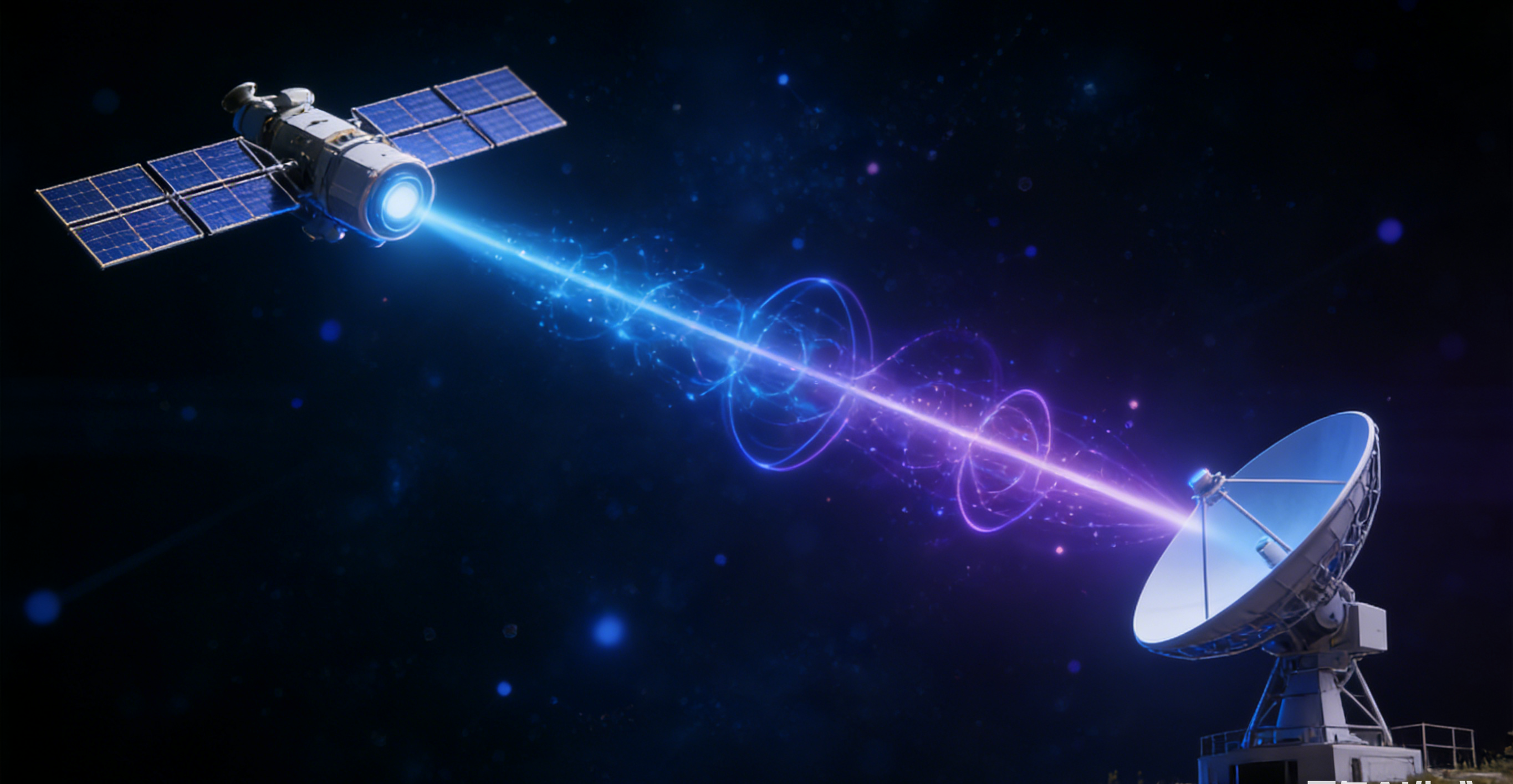
QKD is currently the most mature application. Its security is guaranteed by the laws of physics:
Un-interceptable: Any eavesdropping attempt will disturb the quantum state and be detected.
Unbreakable: Does not rely on mathematical complexity, making it resistant to future attacks by quantum computers.
It has entered the industrialization phase. Typical applications include:
China's "Beijing-Shanghai Trunk Line": The world's first long-distance quantum secure communication backbone network.
The "Micius" satellite: Enables QKD between satellite and ground stations.
Quantum Teleportation: The Future "Teleporter"
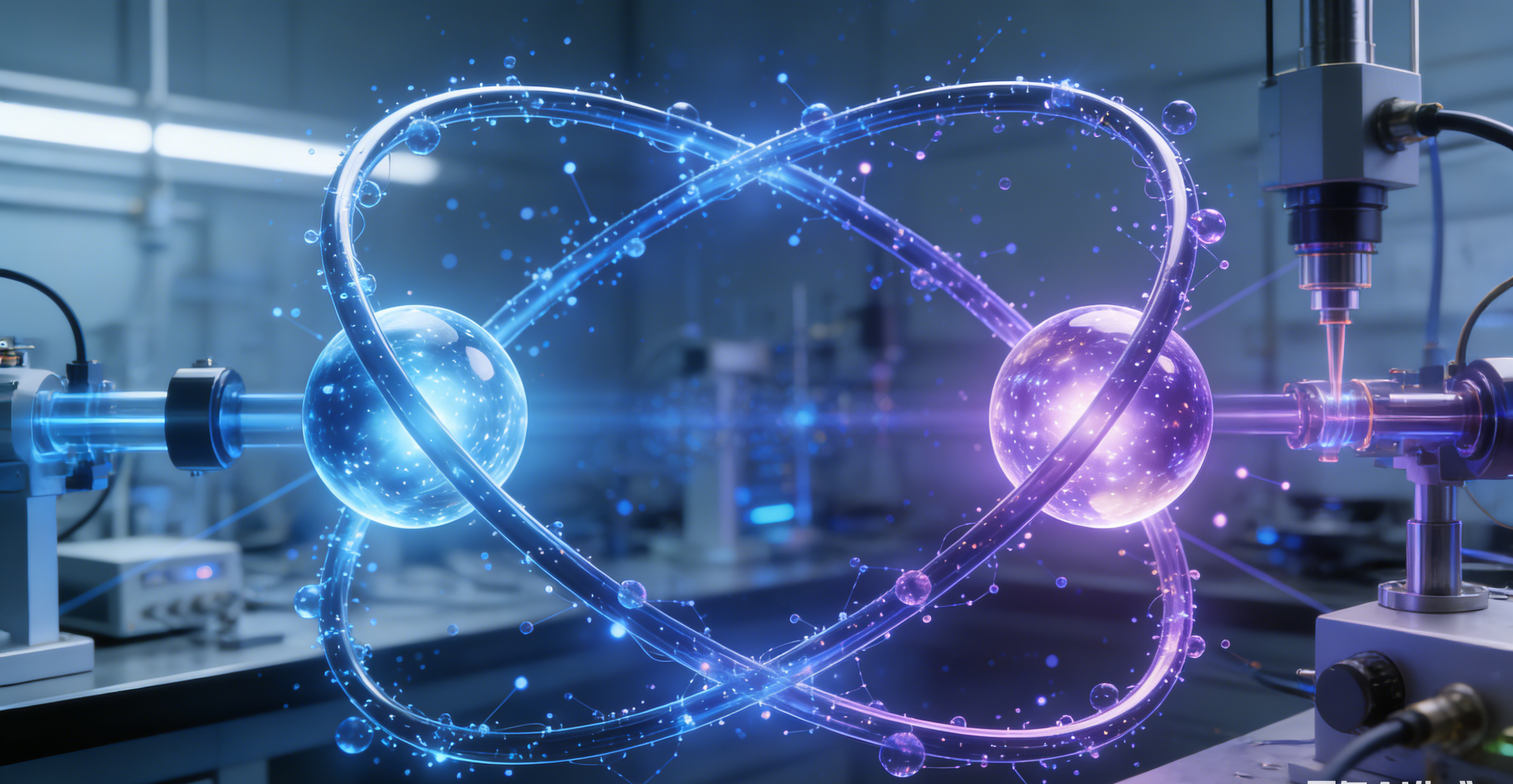
QT leverages quantum entanglement to instantly transfer the unknown quantum state of particle A to a distant particle B, without transmitting any physical carrier. It does not involve faster-than-light information transmission but rather serves as the foundation for building a future "Quantum Internet," enabling direct communication between quantum computers.
Current Development and China's Role
China is a leader in this field, but global competition is intense. Current challenges include increasing the distance and rate of QKD, as well as overcoming key technological hurdles for QT, such as quantum memory (e.g., high-dimensional state storage) and quantum repeaters.
Conclusion
Quantum communication is a revolutionary technology for communication security. Currently, QKD offers a future-proof encryption method, while QT points towards the next-generation internet based on interconnected quantum computers. It is not intended to replace traditional communication but to integrate with it, jointly building a more powerful communication system.


