

The Development of Satellite Communication
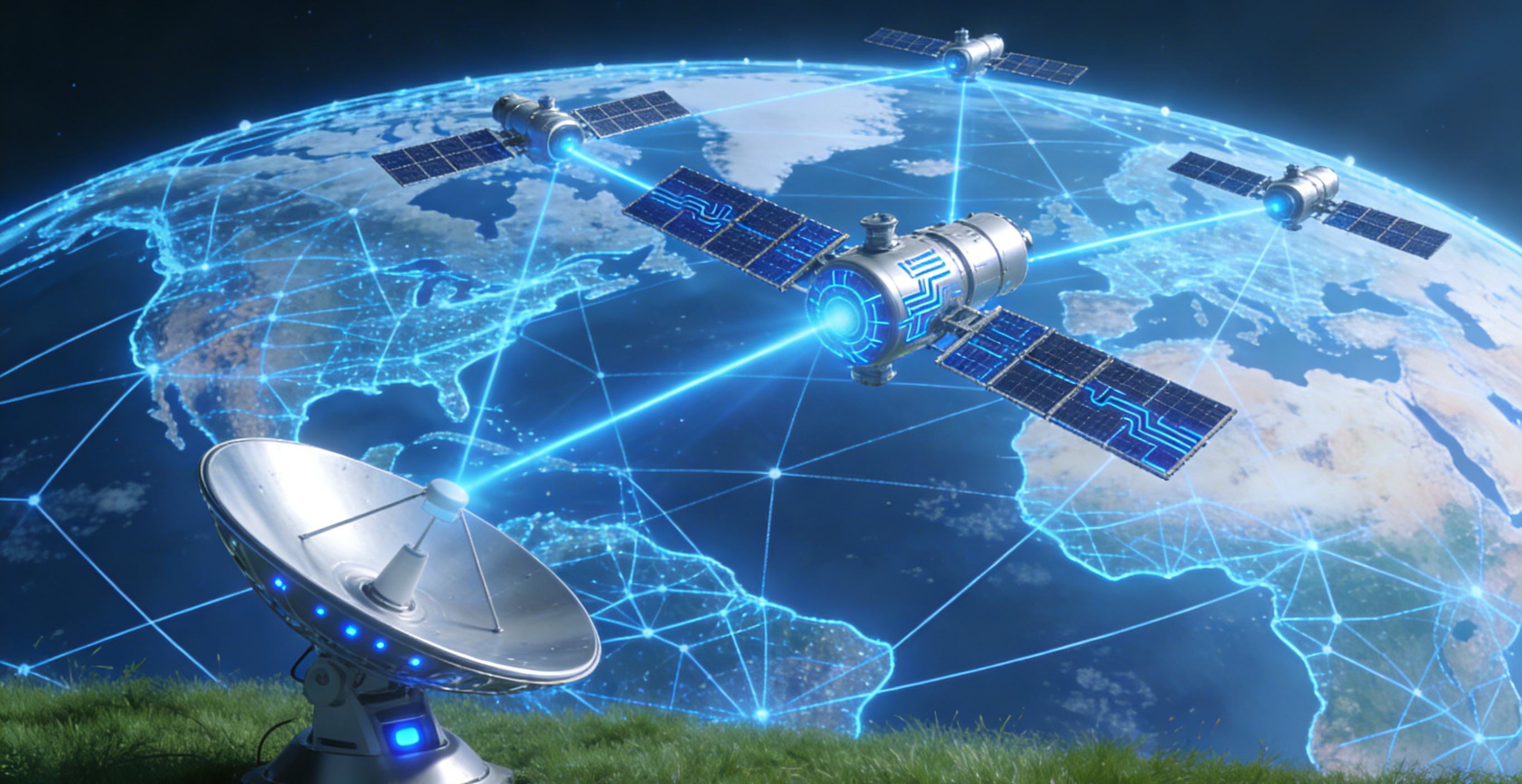
Satellite communication is a key technology for achieving global seamless coverage. Evolving from traditional GEO broadcasting to emerging LEO internet constellations, it is transitioning from a backup and specialized role to a core component of the global information infrastructure. Its development trend is towards lower latency, higher bandwidth, and deep integration with terrestrial networks.

Satellite communication is at a critical juncture, rapidly evolving from traditional applications towards a new stage characterized by scale, mass adoption, and convergence. China and the international market exhibit different development paths and competitive landscapes.
|
Dimension |
Global Market Focus |
China Market Focus |
|
Technology Path |
Dominated by Low-Earth Orbit (LEO) broadband constellations, with exploration of space AI computing and space-based energy. |
Balanced development of GEO and LEO, simultaneously advancing the Tiantong GEO system, the BeiDou short message service, and low-orbit constellations like Hongyan/Hongyun. |
|
Primary Driver |
Led by private commercial aerospace companies (e.g., SpaceX, Amazon), driving high-speed, low-cost innovation. |
Led by state-owned "national teams," strongly guided by policy. Ministries like MIIT release industrial policies to guide orderly competition and convergence. |
|
Application Scenarios |
Mass consumption and globalized services (e.g., global broadband), actively expanding into military, government, and aviation applications. |
Advancing both traditional industry and public access, expanding from emergency response, transportation and other government/enterprise scenarios to mass consumer applications like direct-to-smartphone satellite connectivity. |
|
Industrial Ecosystem |
Intense competition, characterized by "massive constellation deployment at scale + frontier technology exploration." |
Building an ecosystem of "space-ground integration and multi-chain collaboration," emphasizing convergence with terrestrial 5G/6G networks. |
Key Development Trends
1. Accelerated Technological Convergence and Competition
Non-Terrestrial Networks (NTN): Satellite networks are deeply integrating with terrestrial 5G/6G networks, becoming a key part of the 6G standard.
Direct-to-Device (DtD) as a Hotspot: Technologies enabling direct satellite connection for common terminals like smartphones and vehicles without relays are becoming widespread, aiming for a seamless "same SIM, same number" experience.
Exploration of Frontier Technologies: Includes optical inter-satellite links (Japan's SoftBank plans a demonstration satellite launch in 2026), and forward-looking concepts like space data centers and space-based solar power generation.
2. Mass Adoption and Scaling of Application Scenarios
Applications are rapidly expanding from traditional professional fields like emergency communications, maritime, and aviation to consumer-grade scenarios such as outdoor sports, public travel, and network coverage in remote areas.
Multiple institutions predict that 2026 will be a pivotal year for market growth, increased services, and new vendor entry in satellite communication.
3. Coexisting Challenges and Risks
Competition for Orbital and Spectrum Resources: Low Earth Orbit and key frequency bands like Ku/Ka are nearing saturation. National constellation filings (e.g., China's proposals exceed 200,000 LEO satellites) intensify coordination pressure.
Space Safety and Governance: Mega-constellations increase collision risks and space debris, posing challenges for space traffic and asset management.
Technological Maturity and Cost**: Achieving truly global seamless coverage at an affordable price requires continued breakthroughs in key technologies (e.g., space-grade chips, phased array antennas) and mass production costs.
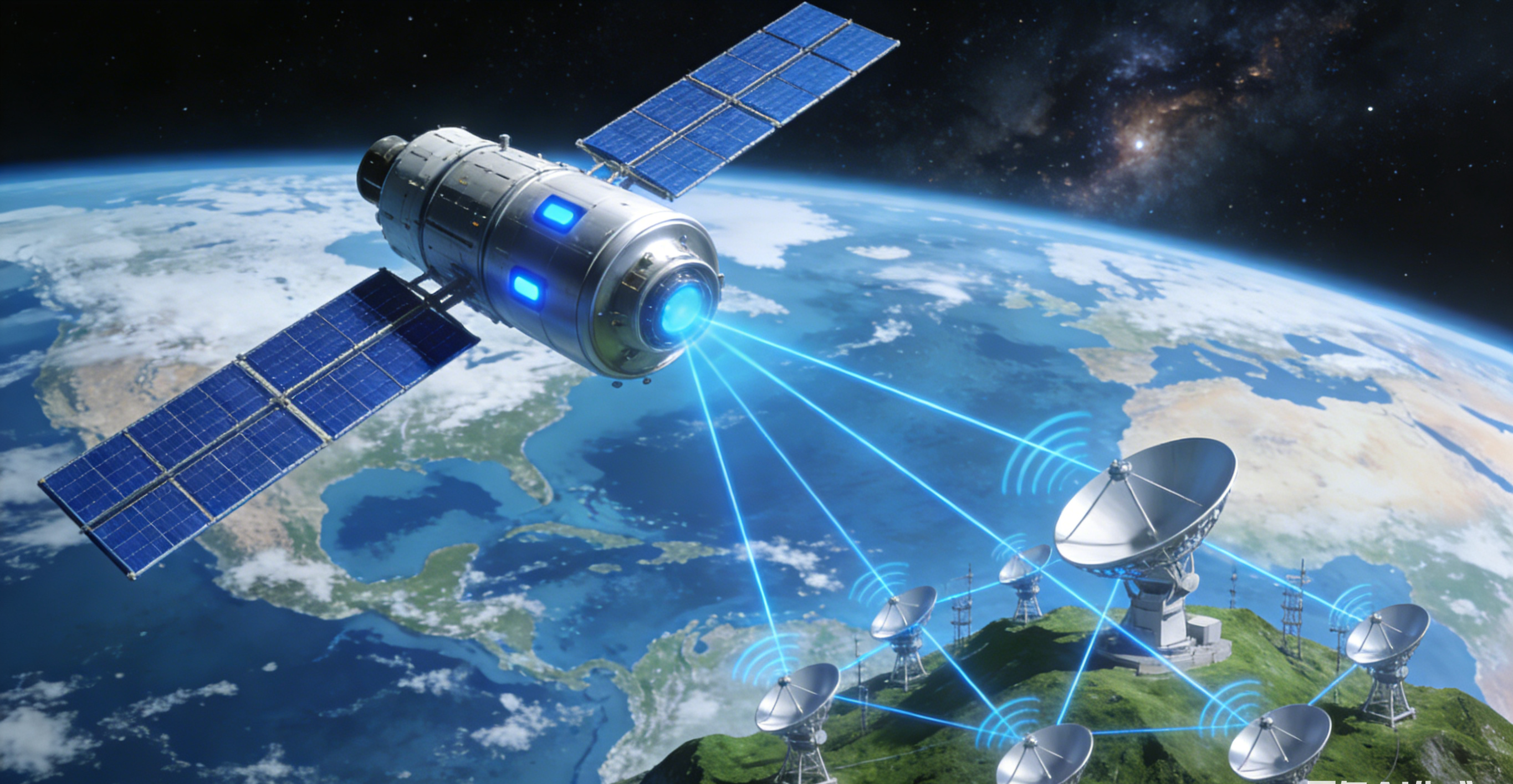
In summary, global satellite communication has entered a new phase centered on LEO broadband constellations and driven by commercial innovation, while China presents a distinct path characterized by policy-guided, space-ground integrated, and GEO-LEO synergistic development. In the coming years, the main themes will be technological convergence, application popularization, and competition for orbital resources.


