

Free-Space Optical Communication (Laser Communication)
Free-space optical communication is the formal academic term for laser communication. It specifically refers to the technology that uses laser beams to transmit information through free space (such as the atmosphere or vacuum), rather than through optical fibers. Essentially, it transplants the core technology of fiber optic communication (optical modulation/demodulation) into a space without physical guiding media. Hailed as a "speed revolution" in the field of communication, it is becoming a key enabling technology for satellite internet, deep space exploration, and integrated space-ground networks.
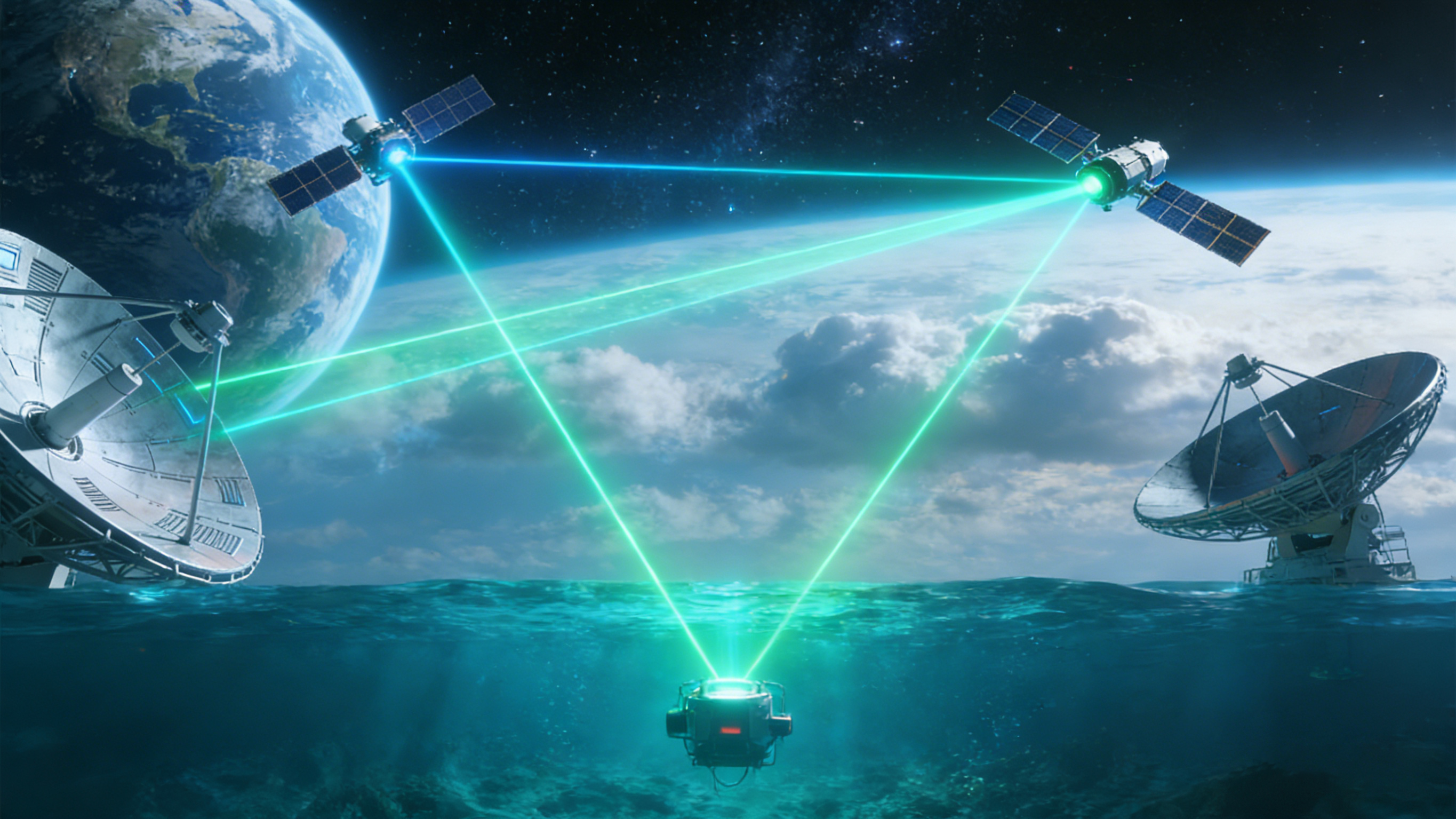
Core Principle: Modulated Laser
Similar to traditional radio frequency communication, laser communication modulates the output light intensity of a laser (e.g., via direct intensity modulation or more advanced coherent modulation) to encode digital signals (0s and 1s) onto the laser beam. At the receiving end, a photodetector captures the optical signal and demodulates it back into an electrical signal, thereby completing the information transfer.
Core Advantages
Ultra-High Bandwidth: Operating in the optical frequency band (e.g., 1550nm), it offers extremely abundant spectrum resources, enabling communication rates from 10 Gbps to the Tbps range. It is a key solution for overcoming transmission bottlenecks in the era of "data explosion."
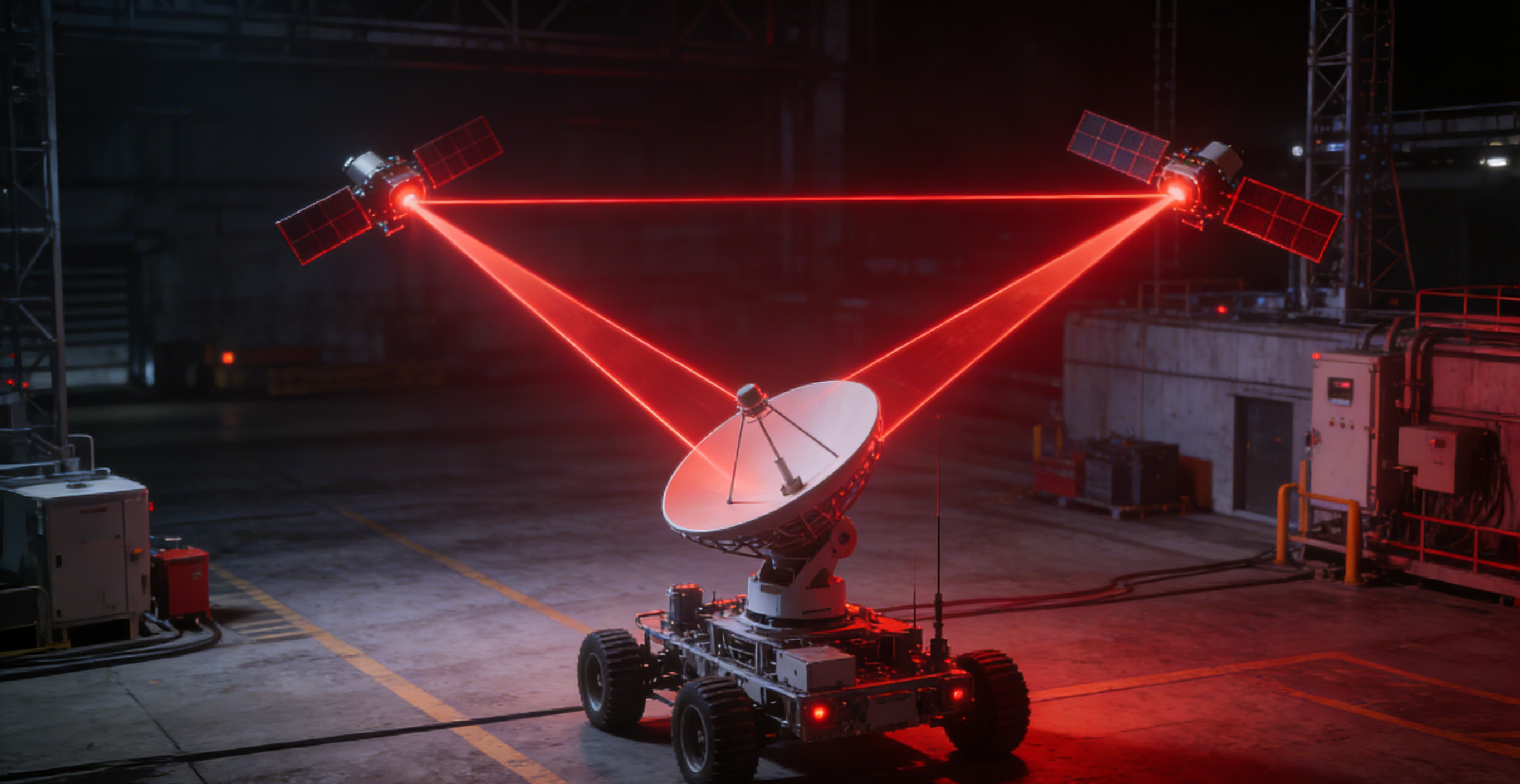
Extreme Confidentiality: Laser beams have a very small divergence angle (typically on the order of milliradians), concentrating energy highly. This makes the signal difficult to intercept outside the beam path, providing inherent high security at the physical layer. When combined with quantum key distribution technology, it can build "absolutely secure" communication systems.
Compact and Low-Power: Optical antennas (telescope systems) are smaller, lighter, and consume less power than radio frequency antennas with comparable functionality. This is crucial for platforms like satellites and drones.
Typical Applications and Examples
Inter-Satellite Links: SpaceX's Starlink Gen2 satellites are deploying laser links on a large scale, creating the largest in-orbit FSOC network for high-speed inter-satellite data routing.
Satellite-to-Ground Links: China's "Micius" satellite has achieved satellite-to-ground quantum key distribution; satellites like Shijian-20 have successfully conducted high-speed satellite-to-ground laser communication experiments.
Air-to-Ground / Terrestrial Links: Used for rapid, high-capacity communication between ships, fixed ground stations, or in emergency disaster relief scenarios.
Deep Space Communication: NASA's "Laser Communications Relay Demonstration" project has successfully transmitted data from beyond the Earth-Moon distance at rates far exceeding traditional radio, serving as a communication cornerstone for future Mars and deeper space exploration.
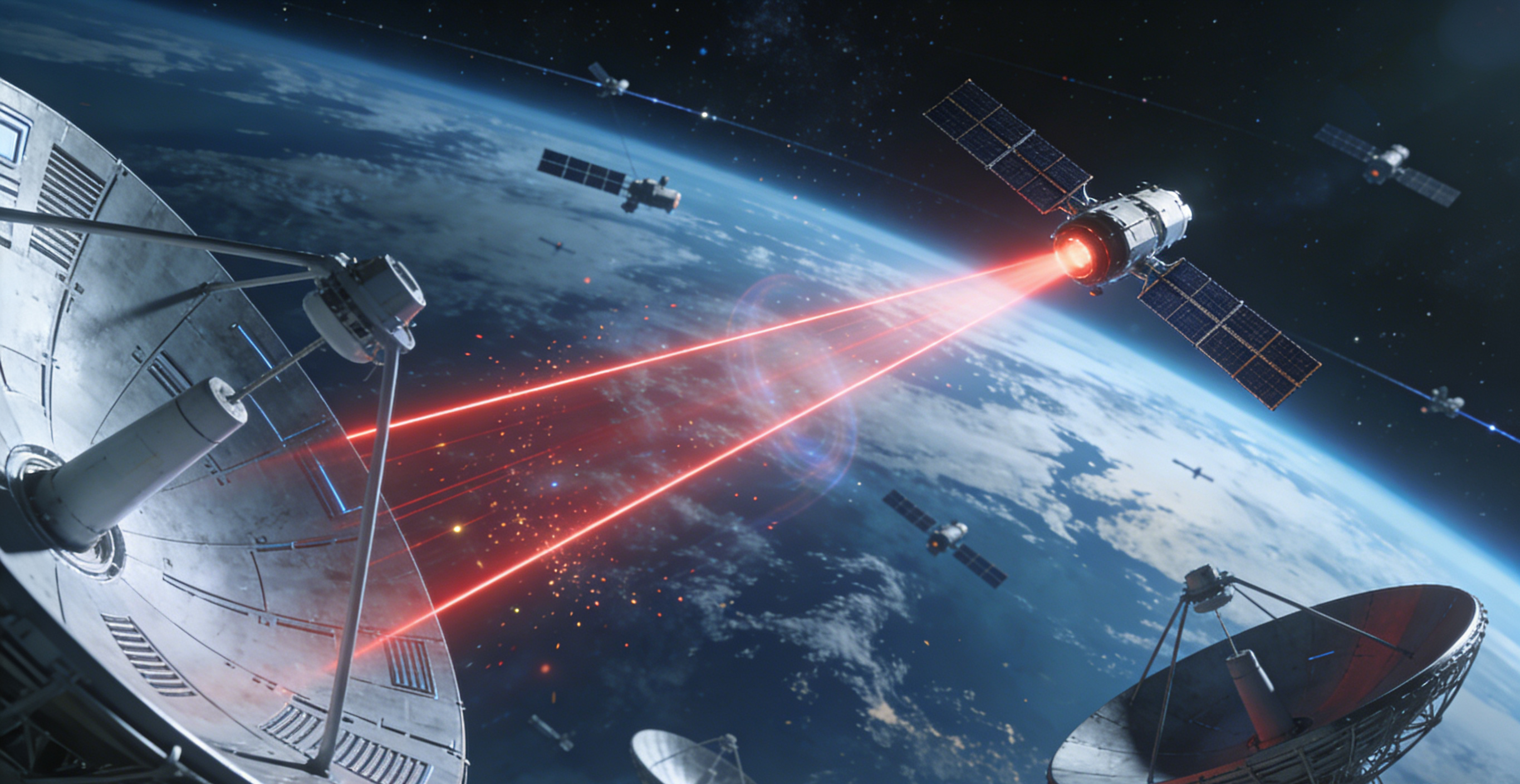
Free-space optical communication has transitioned from the laboratory to large-scale application, particularly in space, where it has become a strategic technology for building high-speed, autonomous, and secure communication networks. Its development trend involves deep integration with high-throughput satellite constellations, 6G integrated space-ground networks, and quantum communication, with the ultimate goal of constructing a global ultra-high-speed information network covering air, space, land, and sea.


