

The Development Status of 6G Technology
6G Technology is the next-generation mobile communication system following 5G, currently in the early stages of vision definition and key technology research. It is expected to begin commercial deployment around 2030. Unlike 5G, which primarily connects "people and things," 6G's core vision is to construct an "Intelligent Connection of Everything, Digital Twin, and Native Intelligence" three-dimensional smart network.
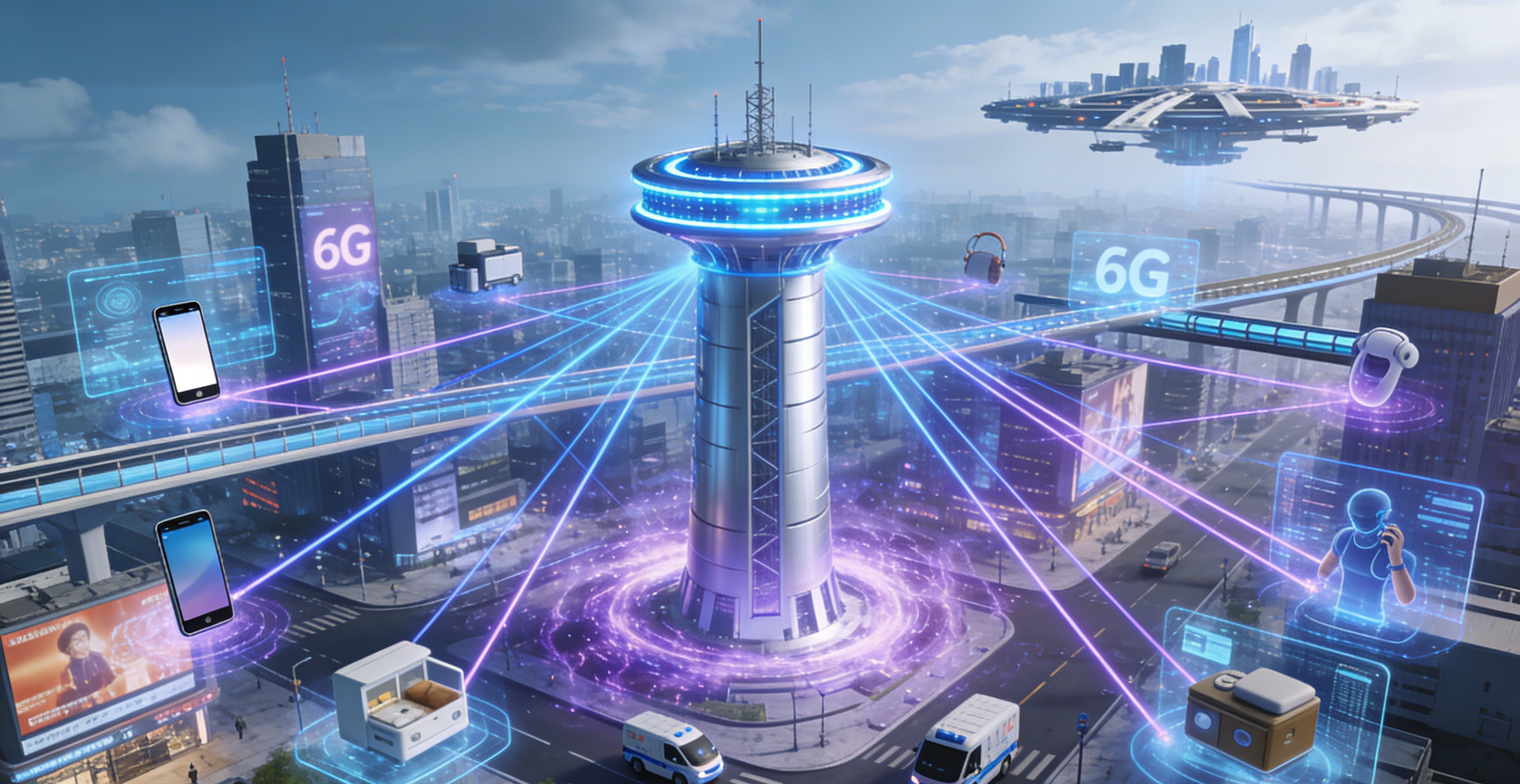
Four Core Capability Leaps in 6G
1. Ubiquitous Coverage: The core breakthrough lies in expanding the communication network from terrestrial to air, space, and sea. By integrating satellite internet and high-altitude platforms (e.g., drones), 6G will achieve seamless, global coverage without dead zones, truly enabling communication in deserts, oceans, and space.
2. Ultimate Performance: Target peak data rates reach 1 Tbps (100 times that of 5G), latency drops to 0.1 milliseconds (sub-millisecond level), and it supports ultra-massive connectivity of up to 10 million devices per square kilometer. This will lay the foundation for applications like holographic communication and sensory interconnection.
3. Integrated Sensing and Communication: The network will not only communicate but also act as a distributed sensor. By analyzing reflected radio signals, 6G can sense an object's shape, movement, and even the environment, enabling high-precision positioning, gesture recognition, and environmental reconstruction. This provides a new dimension of information for autonomous driving and smart homes.
4. Ubiquitous Intelligence: Artificial intelligence will become an intrinsic capability and fundamental service of the 6G network. The network will automatically allocate resources, optimize energy efficiency, and ensure security based on demand. It will also directly provide AI computing power to downstream applications, lowering the barrier for AI adoption across industries.
Potential Key Enabling Technologies
To realize the above vision, global efforts are focused on pioneering the following frontier technologies:
- Terahertz (THz) Communication: Utilizes the Terahertz frequency band (100 GHz - 10 THz) to access enormous bandwidth, providing the physical basis for Tbps-level speeds.
- Reconfigurable Intelligent Surfaces (RIS): These are programmable "smart walls" that can dynamically control the propagation direction of wireless signals, significantly enhancing coverage and energy efficiency.
- Integrated Sensing and Communication (ISAC): Develops new waveforms and signal processing techniques to allow communication and sensing functions to share the same hardware and spectrum.
- Integrated Space-Air-Ground-Sea Network: Designs a unified, efficient network architecture to seamlessly integrate heterogeneous nodes like terrestrial base stations, satellites, and drones.
- Native Security and AI-Native Network: Deeply embeds security mechanisms and AI capabilities into the network protocol design from the outset, rather than adding them as an afterthought.
Application Scenarios Outlook
6G will catalyze integrated applications beyond current imagination:
- Holographic Communication & "Metaverse" Foundation: Enables realistic remote holographic interaction, becoming the ultimate network support for an immersive "Metaverse."
- Smart City Digital Twin: Real-time network sensing and mapping of an entire city's operational state enable millisecond-level precise management and control.
- Autonomous Driving & Low-Altitude Economy: Provides ultra-reliable, low-latency communication and integrated sensing services for fully automated, all-domain transportation systems.
- Remote Control & Industrial Metaverse: Doctors can remotely control robots for precise surgery; engineers can operate equipment on the Moon or in the deep sea in real-time.
Global R&D Status
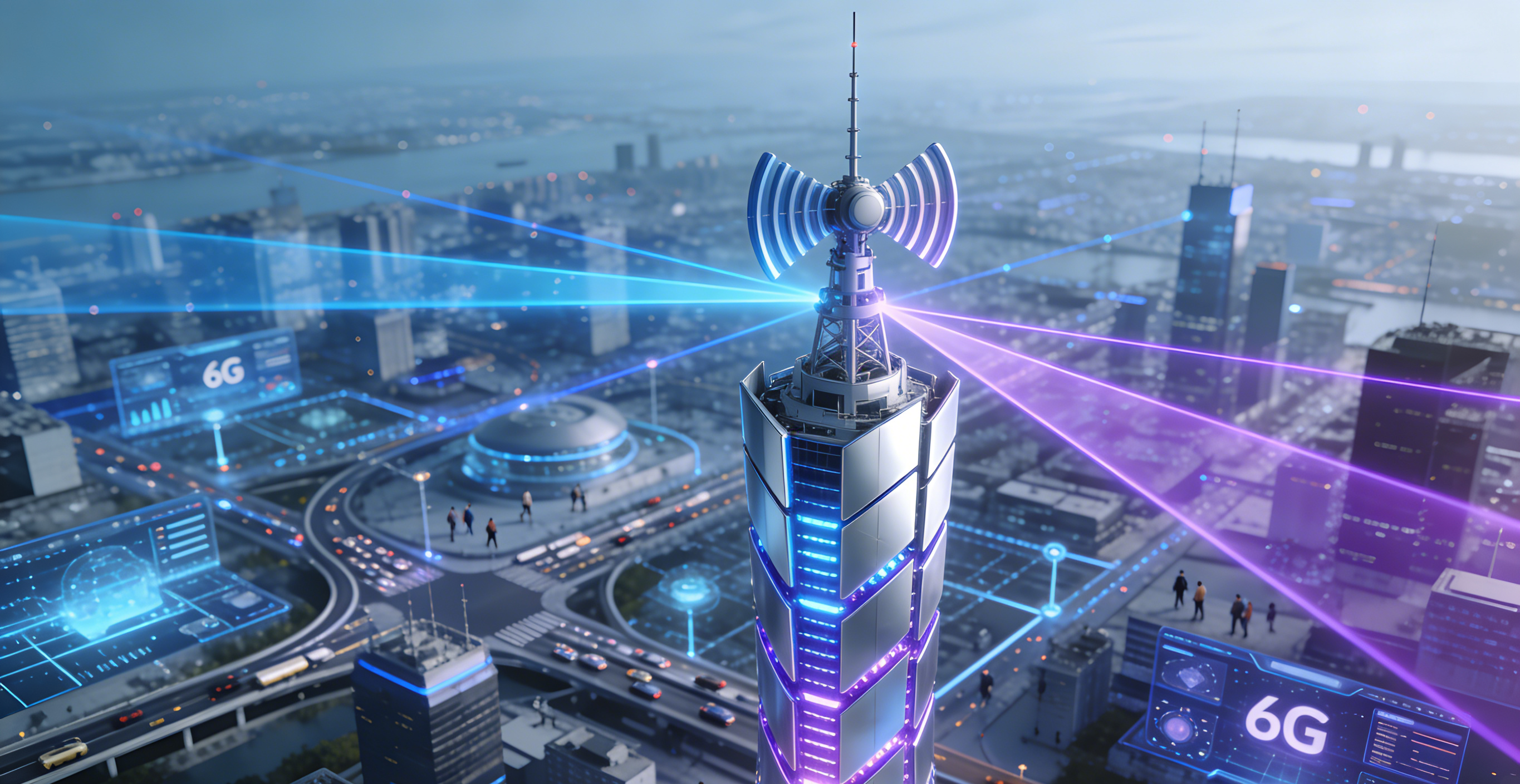
Currently, China, the United States, the European Union, Japan, South Korea, and others have all launched national-level 6G R&D initiatives, forming a competitive landscape. China is at a leading or parallel position in vision proposals, patent applications, and some key technology prototype validations. However, the final standardization process will be the focal point of global competition in the coming decade.
In summary, 6G is not merely a faster version of 5G but represents a fundamental paradigm shift in communication. Its aim is to build an intelligent neural network connecting the physical and digital worlds, which will profoundly impact the global technology competition and industrial landscape over the next ten years.


