

Optical Communication Empowers Humanoid Robots
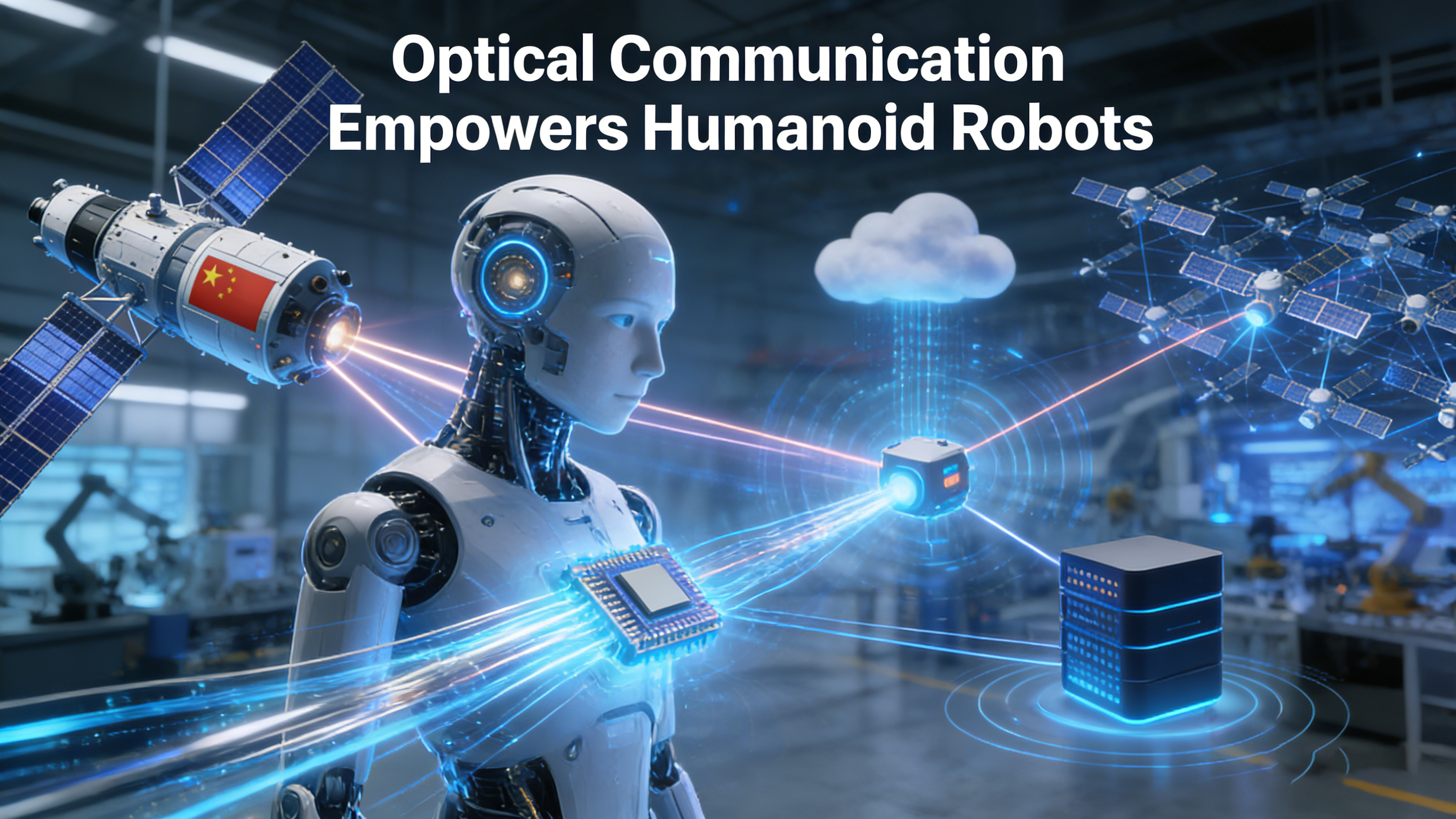
The Integration of Optical Communication and Humanoid Robots represents the deep convergence of ultra-high-speed information transmission and advanced complex mobile platforms. It is not merely about "installing an optical module in a robot" but aims to address the bottlenecks in bandwidth, latency, weight, and interference resistance for data transmission between the "brain" and the "senses" during the practical application of humanoid robots.
Specific Application Scenarios and Technical Solutions
Optical communication brings transformative changes to humanoid robots at two main levels:
1. Upgrading the Robot's Internal "Nervous System"
This is the most disruptive application direction. Currently, communication between a humanoid robot's internal sensors (vision, force sensing, IMU) and its central processor (CPU/GPU), as well as between actuators (joint motors) and controllers, primarily relies on extensive copper wire harnesses, facing bottlenecks such as insufficient bandwidth, heavy and bulky cables, electromagnetic interference, and susceptibility to wear.
Optical Communication Solution: Pre-embed optical fibers in the robot's main torso (spine), with each joint and sensor node connected via miniature optical transceiver modules.
Advantages:
Bandwidth: Easily achieves Tbps-level internal data transfer, meeting the real-time data aggregation needs of dozens of high-definition cameras and force sensors across the body in the future.
Lightweight: Optical fibers are 70%-80% lighter than copper cables with equivalent transmission capacity, significantly reducing the robot's own weight, thereby improving endurance and motion performance.
Interference Immunity: Optical fibers are completely immune to electromagnetic interference, ensuring signal purity in complex motor-driven environments.
Simplified Wiring: A single, slender optical fiber can multiplex multiple signal transmissions, greatly simplifying the internal structure.

2. Real-Time External Communication for Robots
This is a more mature application area for optical communication, addressing the massive data exchange between the robot and the external world.
Communication with Cloud/Edge Servers:
Scenario: Real-time upload of massive environmental video and operational data collected by the robot to the cloud for more complex AI model training or real-time analysis; simultaneously downloading updated models or instructions from the cloud.
Solution: Use high-speed Wi-Fi, 5G/6G for wireless access, with the backend network employing fiber optics to connect to cloud data centers. The key is ensuring ultra-low latency (<10 ms) to enable real-time cloud-based "brain" control.
Multi-Robot Collaboration and Remote Teleoperation:
Scenario: In fixed settings like factories or warehouses, multiple robots can communicate and collaborate with extremely low latency via a local area fiber optic network. In hazardous environments (e.g., disaster relief, space), operators can perform high-fidelity, immersive remote teleoperation over a low-latency optical communication network.
Solution: Deploy indoor fiber optic networks for fixed scenarios; remote teleoperation relies on a converged network of "fiber optics + 5G/LEO satellites".
Current Progress and Future Outlook
Current Status: This integration is still in the early stages of R&D and proof-of-concept. Some laboratories and leading robotics companies are already exploring internal optical interconnects. External communication generally relies on existing high-speed networks.
Challenges: The primary engineering hurdle is the integration of miniaturized, low-power, high-reliability, and low-cost optical transceiver modules into robot joints.
Future: With advancements in technologies like silicon photonics and CPO (Co-Packaged Optics), optical communication is expected to become a standard "nervous system" for future high-end humanoid robots, truly enabling them to process vast amounts of information and achieve complex autonomous decision-making and collaboration.
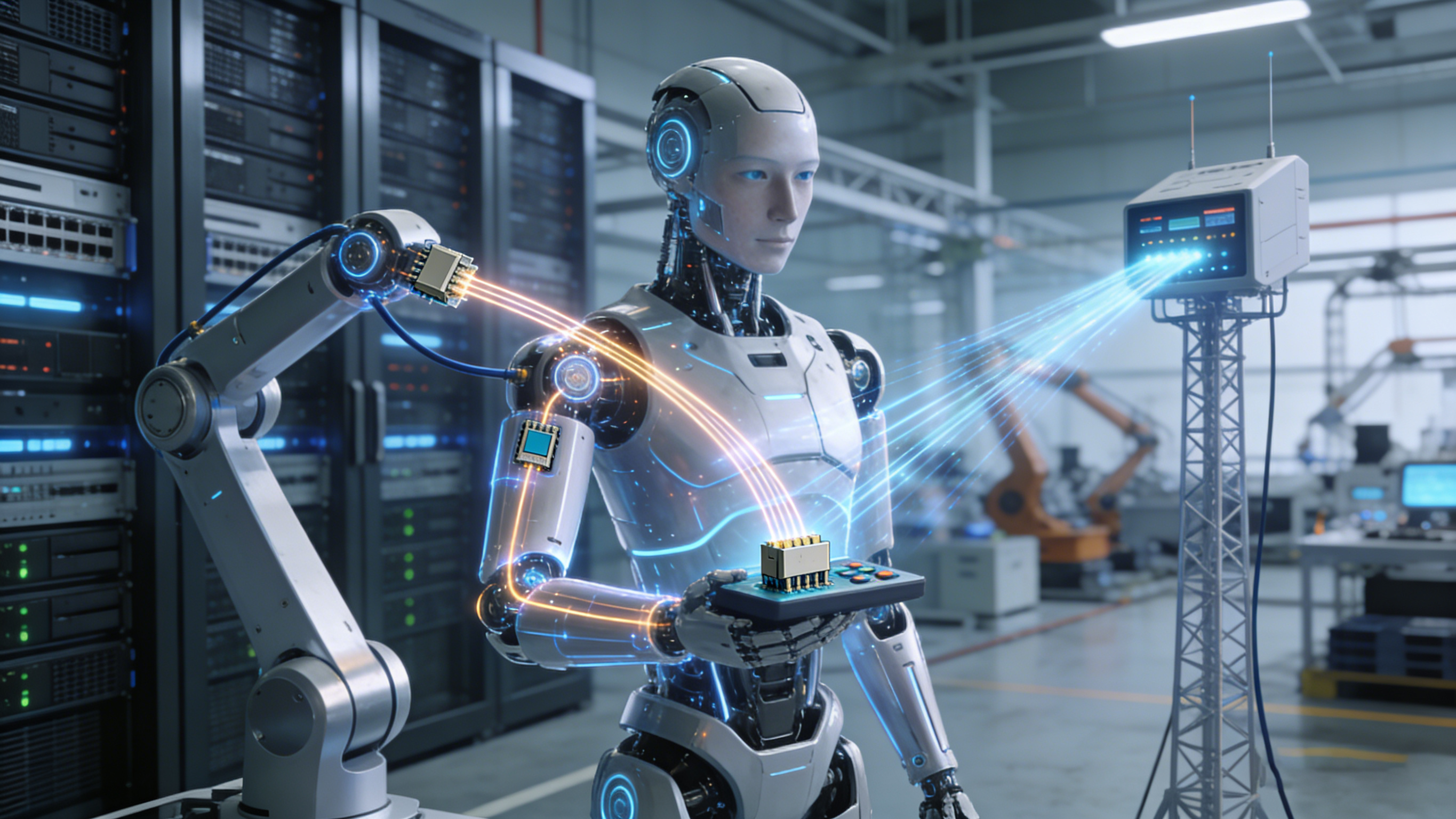
Optical communication is not an optional accessory for humanoid robots but a key enabling technology for breaking through current performance ceilings and advancing towards a "hyper-intelligent, highly agile" form. It addresses the fundamental contradiction of data transmission that constrains robotic intelligence from both internal and external dimensions.


