

Computing Power Grid Integration
"Computing Power Grid Integration" is a forward-thinking concept that refers to integrating a vast array of heterogeneous computing resources (such as data centers, supercomputers, and edge computing nodes) distributed across different geographical locations and owned by various entities. These resources are connected via high-speed networks and consolidated into a logically unified, flexibly schedulable, and tradable "computing power resource pool."** Its goal is analogous to electrical grid integration: to enable users to access standardized computing power services on-demand, anytime and anywhere, just like using electricity.
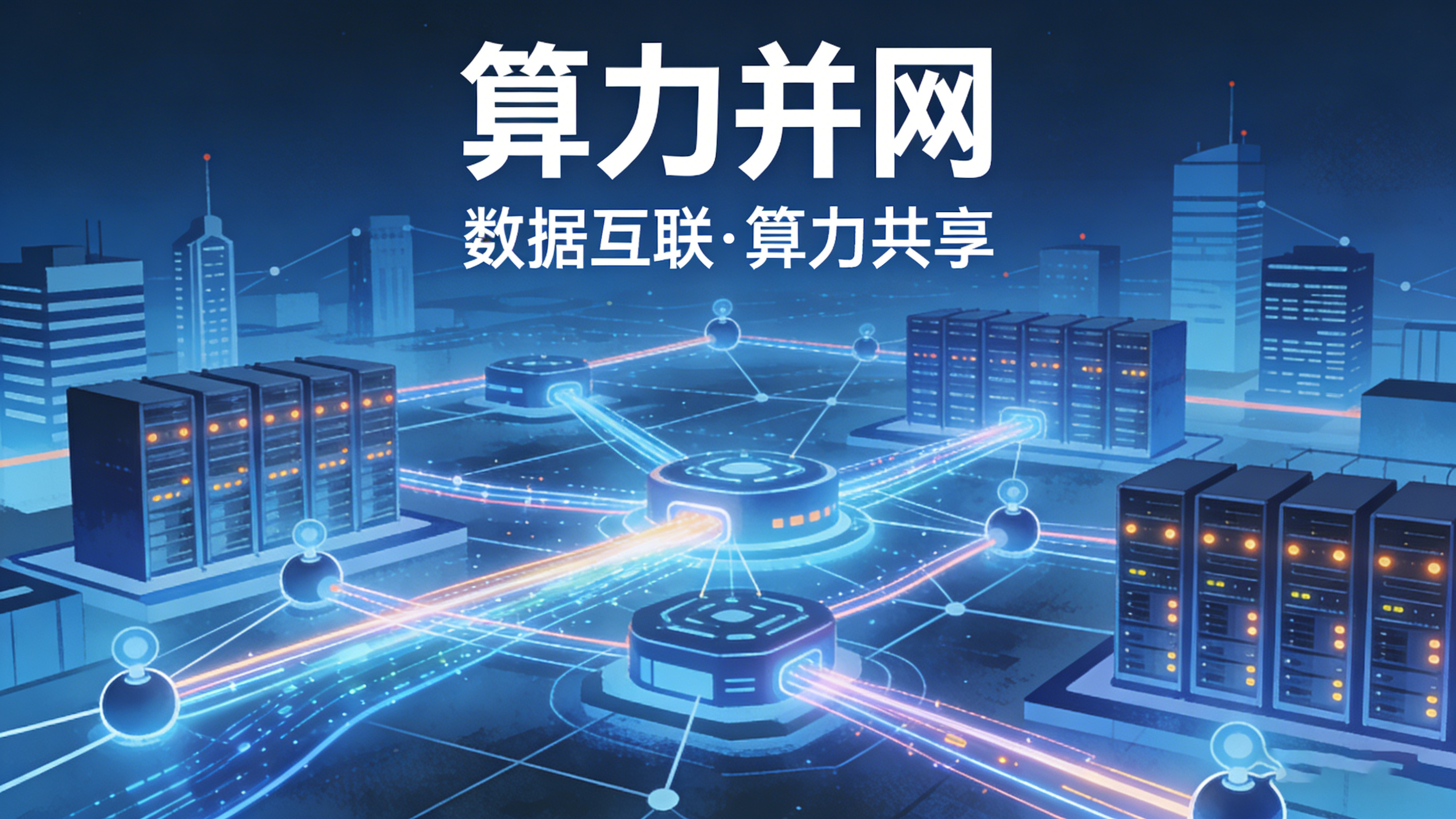
Key Technologies & Core Features
|
Dimension |
Core Content |
Analogy in Power Systems |
|
Resource Abstraction & Standardization |
Virtualizing and pooling hardware computing power from different architectures (CPU/GPU/NPU) and vendors to form standardized "computing units." |
Similar to converting electricity from different plants (thermal, hydro, wind) into standard voltage/frequency |
|
High-Speed Interconnection Network |
Relies on ultra-low latency, high-bandwidth, deterministic national/global networks (e.g., the backbone built by China's "East Data West Computing" project). |
The transmission grid, responsible for long-distance, efficient power transfer. |
|
Intelligent Scheduling & Orchestration |
The core "brain." Intelligently matches and dispatches optimal resources based on task requirements (e.g., AI training, scientific computing, real-time rendering), considering computing type, cost, latency, energy consumption |
The grid dispatch center, responsible for supply-demand balance and optimal distribution. |
|
Unified Trading & Service Platform |
Provides a unified platform for computing power discovery, metering, trading, settlement, and O&M management, enabling its commoditization and servitization. |
The power trading market and meter/billing system. |
Primary Drivers & National Strategy
1. National Strategy: "East Data West Co
mputing" Project: This is the top-level design in China to promote computing power grid integration. It involves building computing hubs in the western regions to handle demand from the east, fostering a national integrated computing network.
2. Technological Demand: AI Large Model Training: The computing power of a single data center is insufficient for training trillion-parameter models, requiring cross-data center collaborative training—a quintessential scenario for computing power grid integration.
3. Economic Efficiency: Optimizing Resource Allocation: Mobilizes idle computing power, achieves "peak shaving and valley filling," and improves the overall utilization rate of society's computing infrastructure.
4. Application Model: Spurring Innovation: Enables SMEs and research institutions to access supercomputing power at lower cost and greater convenience, fostering new applications.
Major Challenges
Technical Heterogeneity: Extreme difficulty in uniformly scheduling chips with different instruction sets and architectures (e.g., x86 CPU, ARM CPU, NVIDIA/AMD/domestic AI chips).
Network Performance Bottlenecks: Computing collaboration places extreme demands on network latency and bandwidth, especially for distributed AI training.
Lack of Standards & Ecosystem: Absence of unified standards for computing power measurement, pricing, scheduling, and interoperability.
Commercial & Security Models: How to price, settle, ensure data security and privacy, and define responsibilities.
Computing Power Grid Integration represents a profound "infrastructuralization" revolution of a core productive resource (computing power), following the electrical grid. It is not merely a technical issue but a systemic engineering endeavor involving national strategy, industrial ecology, and business models. Currently, it is progressing from concept and localized pilots (e.g., the National Supercomputing Internet, AI computing power pools) towards large-scale implementation.


