

Space-Based Solar Power (SBSP)
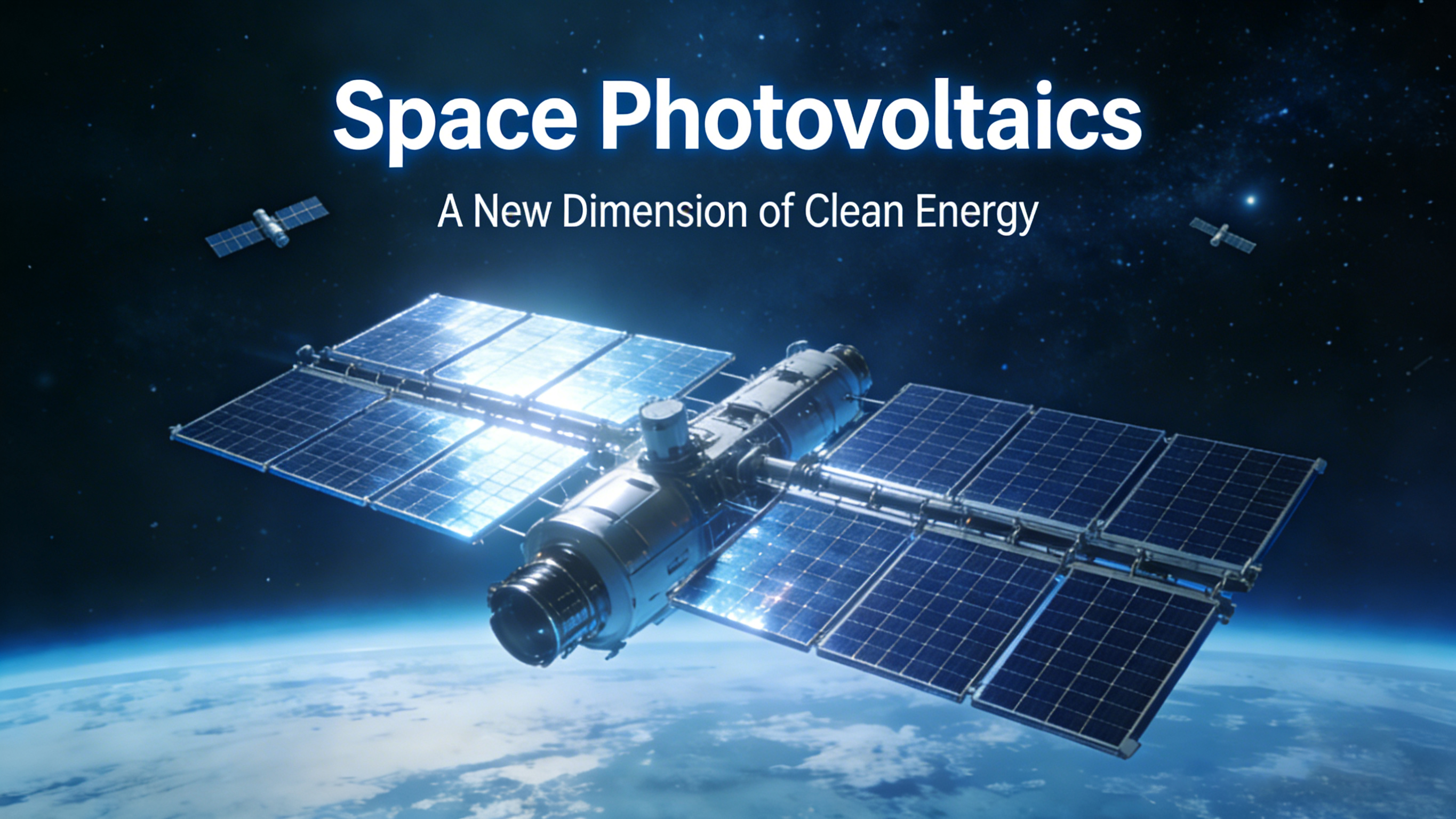
Space-based solar power refers to the construction of ultra-large solar power stations in space (such as in Earth's orbit) to collect solar energy and efficiently convert it into electricity. This power is then wirelessly transmitted via microwaves or lasers to terrestrial power grids or other spacecraft in space. It represents a space-based energy solution.
I. Why Move Power Stations into Space?
Compared to terrestrial photovoltaics, space-based solar power benefits from an almost perfect power generation environment. This is the fundamental reason it has captured global attention.
|
Advantage Dimension |
Specific Description |
|
High Energy Density |
In space, there is no atmospheric attenuation of sunlight, no cloud cover, and no day/night cycle. The solar radiation received per unit area is 8 to 10 times higher than on the ground. |
|
Continuous, Stable Power Supply |
Stations in specific orbits (e.g., geostationary orbit) can be bathed in sunlight over 99% of the time, enabling 24/7 uninterrupted power generation. This gives them the potential to serve as baseload power sources, an advantage difficult for terrestrial renewable energy sources to match. |
|
Wide Coverage Area |
A satellite in geostationary orbit has a field of view covering nearly one-third of the Earth's surface. Via wireless power transmission, it can flexibly supply electricity to remote mountainous areas, islands, disaster zones, and other regions difficult to reach with traditional grids. |
|
Enabling the Space Economy |
It can provide continuous, economical power for large-scale space-based computing centers, space stations, lunar bases, etc., serving as fundamental support for future space activities. |
II. The Global Race for "Future Energy"
Space-based solar power is currently in a critical phase, transitioning from theoretical exploration to key technology validation, with various countries actively positioning themselves.
China
Project/Progress: The "Chasing the Sun Project." Led by Xidian University, in 2022, China completed the world's first full-link, full-system ground validation system. Recent breakthroughs have been made in "one-to-many" mobile target power transmission and high-precision pointing control.
Future Plans: Plans to conduct a megawatt-level in-orbit experiment around 2030, with hopes of building the first commercial system between 2030 and 2050.
USA
Project/Progress: Caltech successfully conducted an in-orbit wireless power transmission experiment in 2023, converting solar power into microwaves and transmitting it back to Earth, validating the feasibility of key technologies.
Commercial Dynamics: SpaceX founder Elon Musk recently announced plans to deploy 100 gigawatts (GW) of solar-powered AI satellite energy networks into orbit annually to support future space-based computing demands.
III. Ambitious Vision, Stark Reality: Enormous Challenges
Despite the tantalizing prospects, turning this science-fiction-like concept into reality faces unimaginable hurdles.
1. Astronomical Cost: This is the biggest obstacle. It's estimated that building a 2 GW space power station would see launch costs alone account for over 70% of the total expenditure, potentially reaching $90 to $137 billion USD. Its Levelized Cost of Energy (LCOE) is projected at $0.61 - $1.59 per kWh, which is 10 to 80 times higher than current terrestrial photovoltaics. Economic viability may only appear when reusable rocket technology reduces launch costs by another order of magnitude.
2. Low System Efficiency: The entire chain—from solar energy collection, conversion to microwaves, transmission to Earth, and reconversion to electricity—currently has a total system efficiency of only about 13%. This means nearly 87% of the energy is lost in the process.
3. Difficult In-Orbit Construction and Maintenance: A 2 GW power station would require a solar array area of 11.5 to 19 square kilometers and a total mass of nearly 10,000 metric tons, equivalent to over a hundred International Space Stations. This would demand thousands of launches and ultra-high-precision assembly by autonomous robots, while humanity's current capability for in-orbit assembly and maintenance of large structures is still very rudimentary.
4. Safety and Environmental Issues: Ensuring that high-power microwave beams are precisely aimed, avoiding interference with passing satellites, aircraft, birds, or ground ecosystems, is another critical challenge that must be solved.
Conclusion
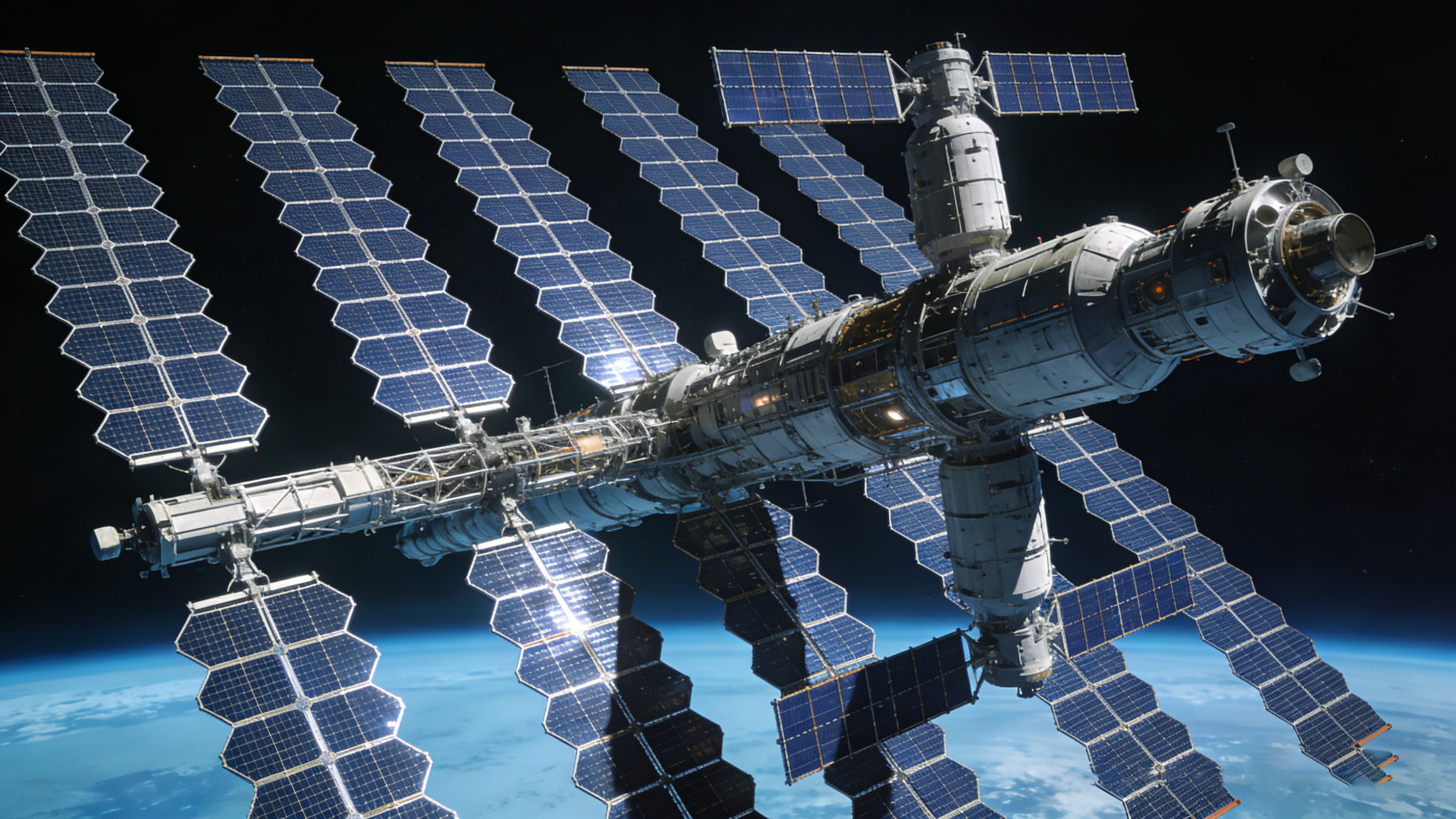
In summary, space-based solar power is a disruptive technology aimed at providing clean, stable, and efficient energy for Earth and space activities, potentially reshaping humanity's energy landscape fundamentally.
Currently, it is rapidly moving from science fiction concept to technological validation. Major powers like China and the US have taken an initial lead in this race for future energy. However, to overcome the triple hurdles of technology, cost, and engineering, and achieve large-scale commercialization, even optimistic estimates place it beyond 2050. Whether it becomes the next photovoltaic revolution or remains like nuclear fusion—perpetually decades away—time will tell.


