

Smart Economy
The concept of the smart economy was first included in the Government Work Report for the year 2026, being regarded as the core engine for China's high-quality development in the post-digital economy era. It is not merely a simple combination of "artificial intelligence + a certain industry," but rather a "full-scenario intelligent revolution" permeating every aspect of production and life.
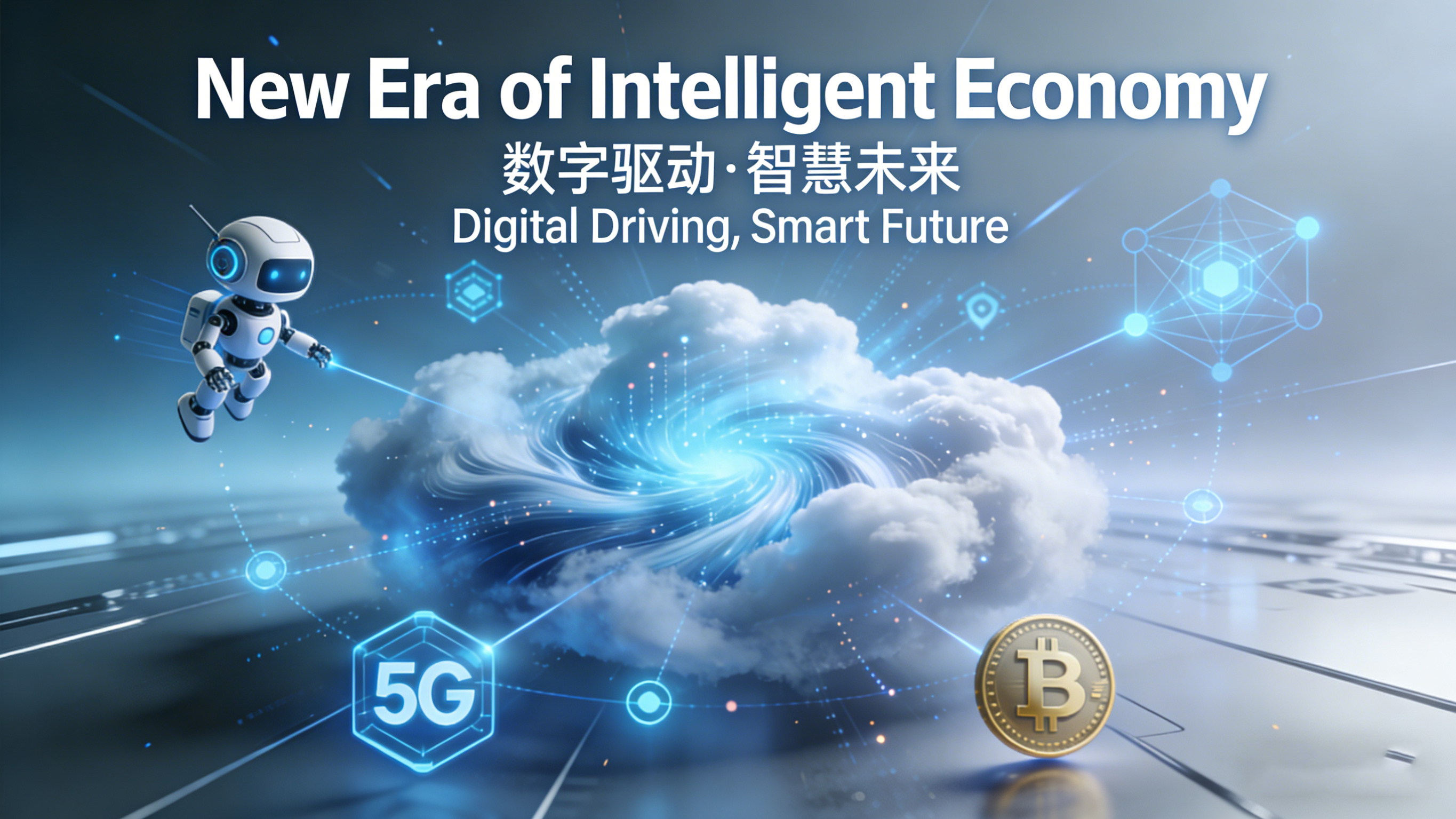
What is the Smart Economy?
The smart economy is a new economic form with artificial intelligence as its core driving force, utilizing data, algorithms, and computing power as key production factors. It is formed through the ubiquitous interconnection and deep collaboration between people, machines, and things. It represents an advanced stage of the digital economy.
"Smart Economy = (Data + Computing Power + Algorithm) × Intelligent Applications"
This formula means combining massive data, powerful computing capabilities, and sophisticated algorithms to empower all walks of life. It is not an "add-on" but the "core": Previously, we might have added a robot to a factory (AI +); now, the entire process—from raw material procurement and production scheduling to logistics and distribution—is coordinated by an intelligent system (Smart Economy), achieving "holistic empowerment."
Four Core Characteristics of the Smart Economy
1. Data-Driven: Data becomes the most dynamic factor of production. Through real-time analysis of massive data, enterprises can make more precise decisions, such as predicting consumption trends and optimizing supply chains.
2. Human-Machine Collaboration: Machines handle what they are good at (standardized, repetitive tasks, massive calculations), while humans focus on their strengths (creativity, emotional decision-making). For example, doctors can diagnose illnesses more accurately with the assistance of AI diagnostics.
3. Cross-Border Integration: Industry boundaries are blurred. For instance, a car is no longer just a means of transport but a "mobile intelligent terminal" integrating new energy, AI, and communication technology.
4. Co-creation and Sharing: Based on open-source platforms and sharing mechanisms, both large and small enterprises can innovate together. Large companies build platforms, while small companies specialize and deepen their expertise, forming an "intelligent ecosystem."
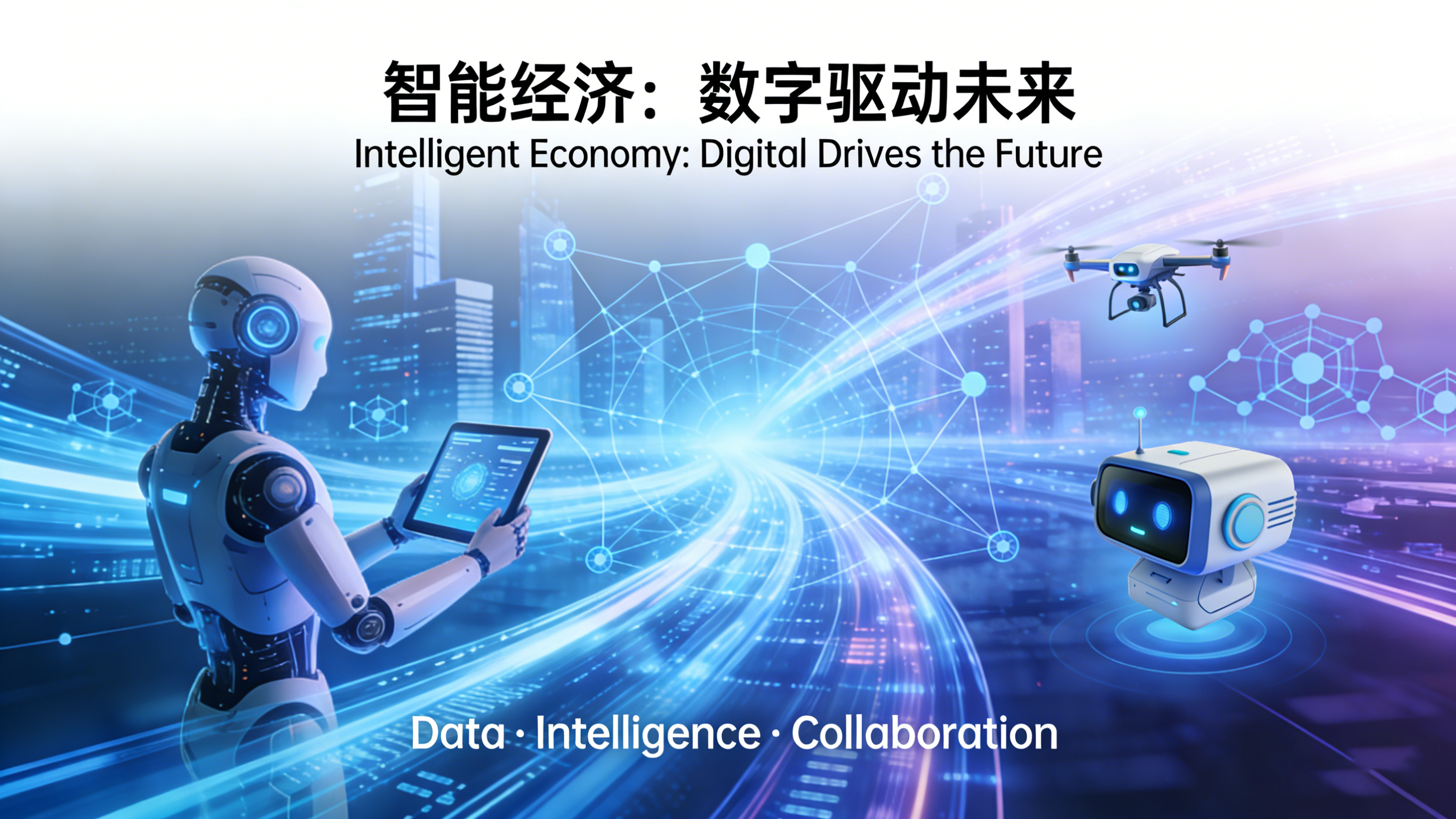
Two Core Infrastructures
Developing the smart economy requires solidifying two key "foundations":
1)Computing-Electricity Coordination: This involves precisely matching "computing power demands" with "green electricity." For example, directing the enormous computing needs from the eastern regions to areas in the west rich in clean energy (like hydro and wind power) ensures power supply while achieving environmental protection.
2)LEO Satellite Internet: By launching satellites into low Earth orbit to form a global communication network, ground base station blind spots (such as remote mountains, oceans, high altitudes) are eliminated, paving the "neural network" for the ubiquitous coverage of the smart economy.
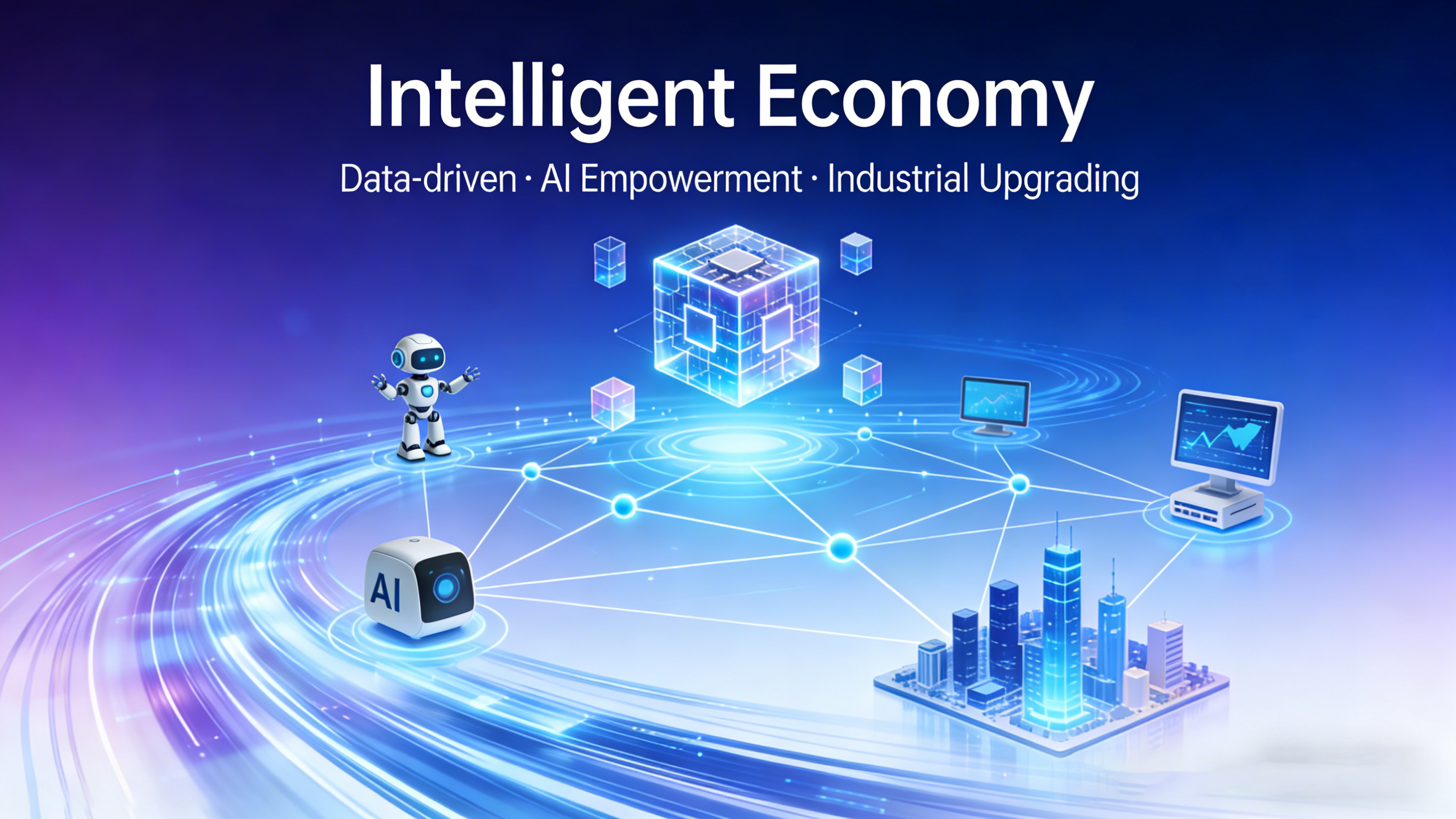
Application Scenarios and the Future
The smart economy has already deeply integrated into our lives:
Daily Life: Smart homes provide proactive services, AI assists doctors in reading medical images, and smart navigation helps avoid traffic congestion.
Industrial Sector: Automated container trucks operate efficiently at Tianjin Port; paper companies use "industrial brains" to save upstream and downstream partners nearly 100 million yuan annually.
The smart economy is moving from a "technological concept" to "benefiting the people's livelihood." It will be the core theme of China's economic transformation and growth for a long time to come.
For optical communication, its role in the smart economy is far more significant than a simple "plumber." It is the key force "consolidating the foundation" and "unblocking the circulation" for the smart economy. Through the underlying logic of "two-way empowerment," it supports every link from terminal experience to computing power scheduling. It is no longer merely a channel for data transmission but is becoming more efficient and reliable through self-evolution (empowering the network with intelligence). Simultaneously, by carrying and accelerating AI (promoting intelligence with the network), it underpins various aspects of the smart economy, including computing power networks, smart homes, and industry digitalization.
Shenzhen Fholink Technology Co., Ltd. keeps pace with the times by meticulously developing and producing a comprehensive series of supporting optical transmission products. Ranging from optical modules and DCI systems to OLP protection, WDM equipment, EDFA amplifiers, and optical cable monitoring systems, every product is fully aligned with current policies and market demands. Our goal is to provide all customers with more stable and efficient optical transmission support. Whether you are a new client or an old friend, you are welcome to contact us for consultation at any time. Let's explore together how to leverage superior optical transmission products to contribute to the success of your projects.


