

Fiber to the Car" – Solving Intelligent Vehicles' "Bandwidth Anxiety
"Fiber to the Car" is another highly sought-after "trend" in the field of optical communications during this year's Two Sessions, following the "integration of computing power into the grid." It refers to the comprehensive replacement or upgrade of traditional in-vehicle copper cables with optical fiber communication technology, serving as the "neural network" for data transmission inside future intelligent vehicles.
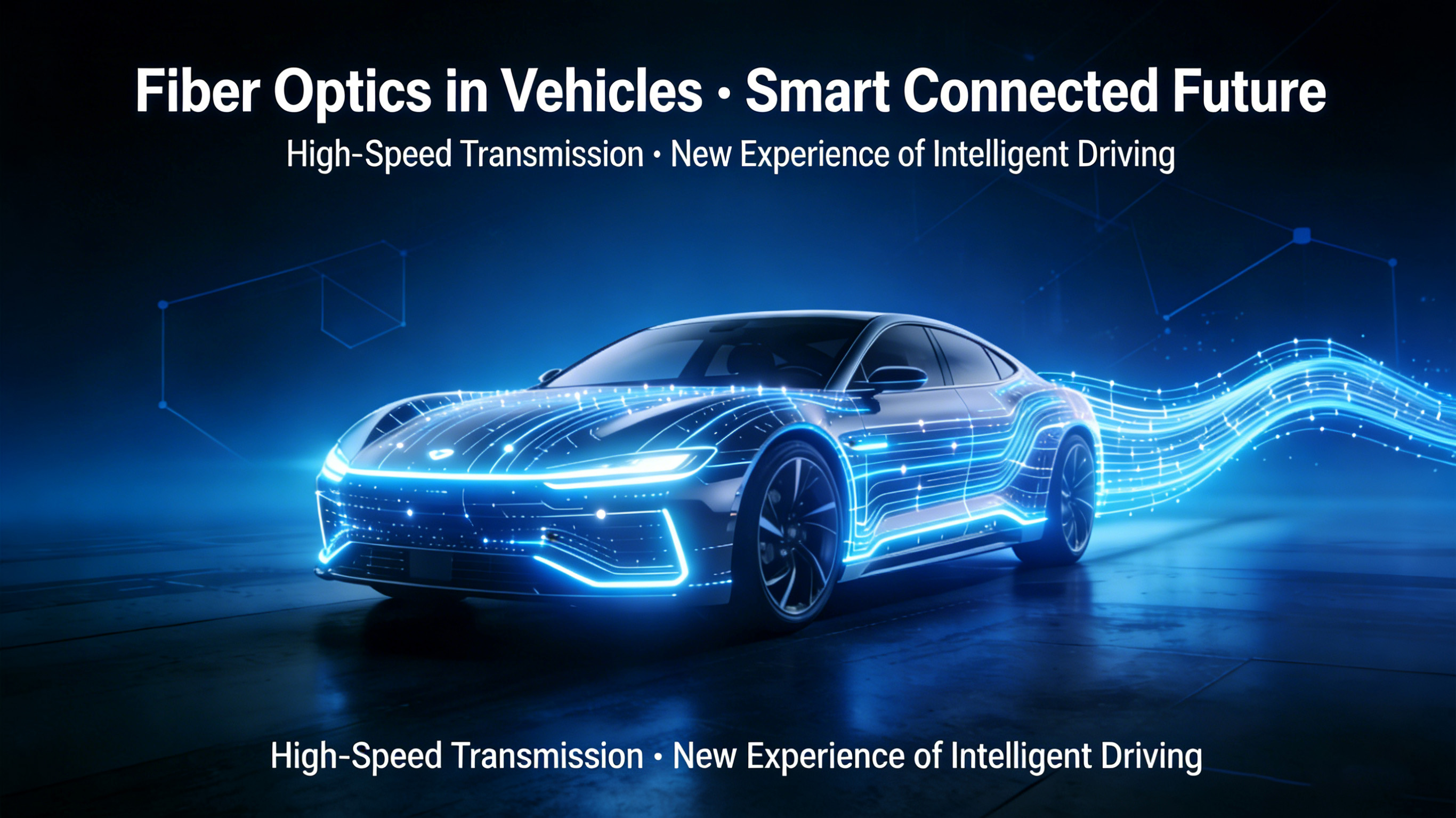
This concept has garnered widespread attention due to the proposal during this year's Two Sessions by Liu Wu, a National People's Congress deputy and engineer at CICT. It is regarded as a core technology to solve the "bandwidth anxiety" of Level 3 and higher autonomous driving and is expected to promote the deep integration of two trillion-yuan industries: optoelectronics and automotive .
To help you grasp the full picture, I have organized its core logic, latest progress, and market prospects:
|
Dimension |
Core Content |
|
Core Drivers |
Level 3 and higher autonomous driving has entered a critical period for commercialization. The per-vehicle bandwidth demand is evolving from the current 10-50Gbps to over 100Gbps, with traditional copper cables approaching their physical limits . |
|
Technical Advantages |
High bandwidth (supports over 10Gbps), low latency (microsecond level), lightweight, and inherent immunity to electromagnetic interference (especially important for vehicles with dense motors) . |
|
Key New Applications |
1. HD Camera Transmission: Supports long-distance, lossless data transmission for 8-megapixel and higher Specifications cameras . 2. Battery Safety Monitoring: Utilizes optical fiber sensing technology to achieve precise, distributed early warning for battery thermal runaway, far surpassing traditional solutions . |
|
Lates tIndustry Progress |
1. Policy Recommendations: Deputy Liu Wu suggested formulating a national strategy, establishing special projects, and striving to reduce system costs to market-acceptable levels within 3-5 years . 2. Corporate Breakthroughs: Joyson Electronics (Joyson Electronics) , in collaboration with the optical module leader Zhongji Innolight , launched an in-vehicle optical communication solution in February 2026 and announced it is ready for mass production . |
|
Market Size |
Research predicts that by 2030, China's in-vehicle high-speed communication and sensing market will reach the "hundreds of billions" level . |
|
Current Obstacles |
High cost (automotive-grade optical modules are several times more expensive than copper cables), insufficient industry chain coordination (lack of joint verification platforms between optoelectronic companies and vehicle manufacturers), and lack of standards . |
In-Depth Interpretation: Why is "Fiber to the Car" an Inevitable Trend?
Behind this is a "fiber replacing copper" revolution happening inside automobiles, mirroring the development trajectory of telecommunications networks .
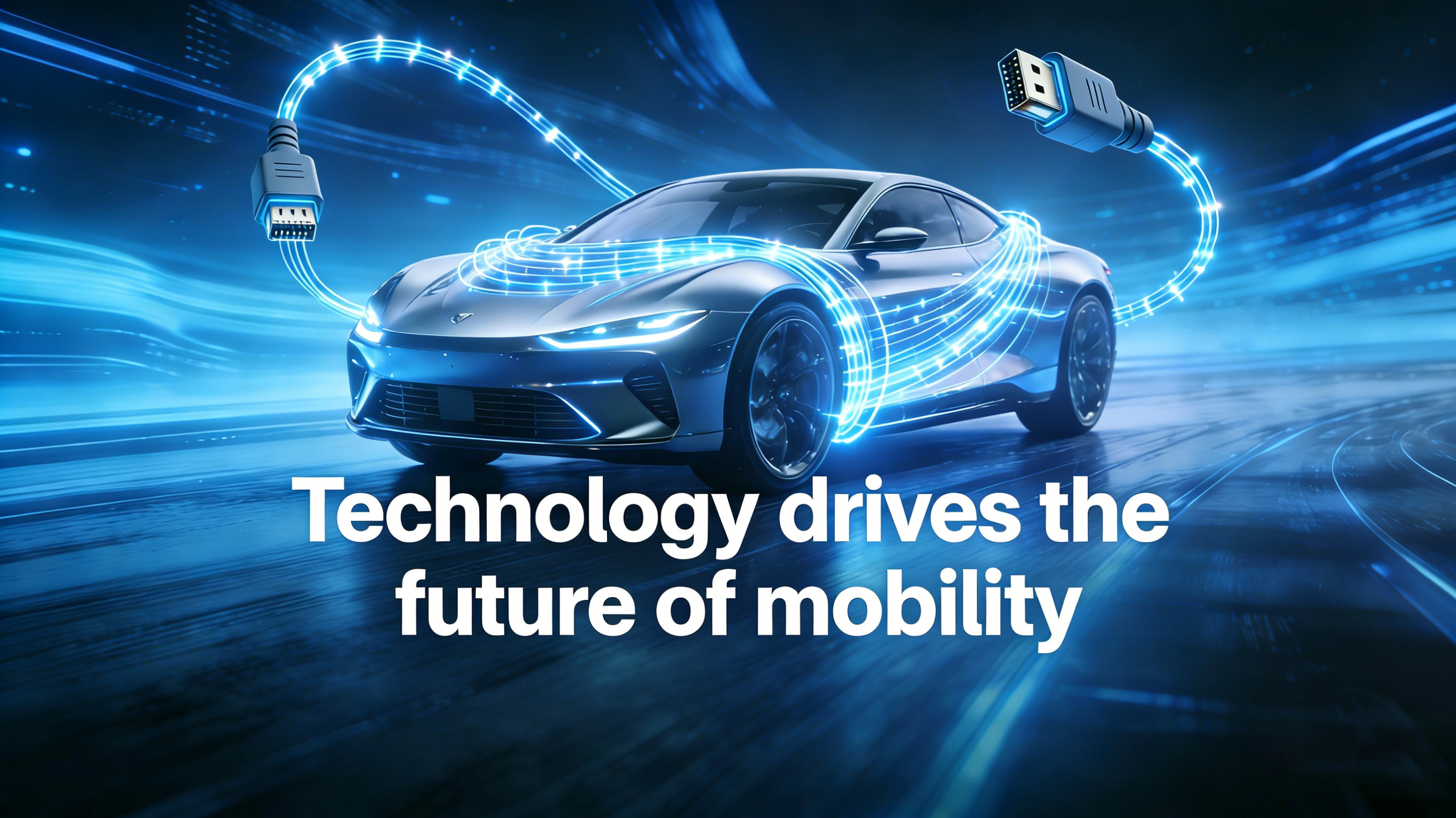
The Dilemma of Copper Cables: Traditional in-vehicle copper cables not only face a bandwidth ceiling but also encounter severe electromagnetic interference issues when transmitting signals above 10Gbps. Additionally, the weight of the wiring harness affects energy consumption and range .
The Killer Advantages of Optical Fiber: Besides high bandwidth, optical fiber's "anti-interference" characteristic is significantly advantageous in electric vehicles with complex electromagnetic environments . More importantly, optical fiber sensing enables millisecond-level, distributed monitoring of battery pack temperatures—a "black technology" that addresses a key safety pain point in electric vehicles and is something copper cables cannot match .
How Will It Reshape the Definition of Automobiles?
Once "fiber to the car" is realized, the automobile will transcend its definition as a mere means of transportation. As Deputy Liu Wu stated, a high-speed, reliable optical fiber network allows the massive amount of data generated inside the vehicle to be efficiently transmitted and processed, propelling the evolution of automobiles into "embodied intelligent agents" with multiple functions .
Shenzhen Fholink Technology Co., Ltd. has been deeply involved in the optical communication industry for many years, possessing a wealth of optical transmission solutions and supporting optical communication equipment. We have distinct advantages in the fields of optical fiber sensing and optical modules. Both new and old friends are welcome to contact us for consultation at any time!


