

V2X Communication (C-V2X) - Cellular Vehicle-to-Everything
V2X communication, specifically C-V2X (Cellular Vehicle-to-Everything), is a communication technology that enables vehicles to directly "talk" with everything around them (Vehicles, Pedestrians, Infrastructure, and the Network). It is regarded as the "nervous system" for realizing future autonomous driving and intelligent transportation.
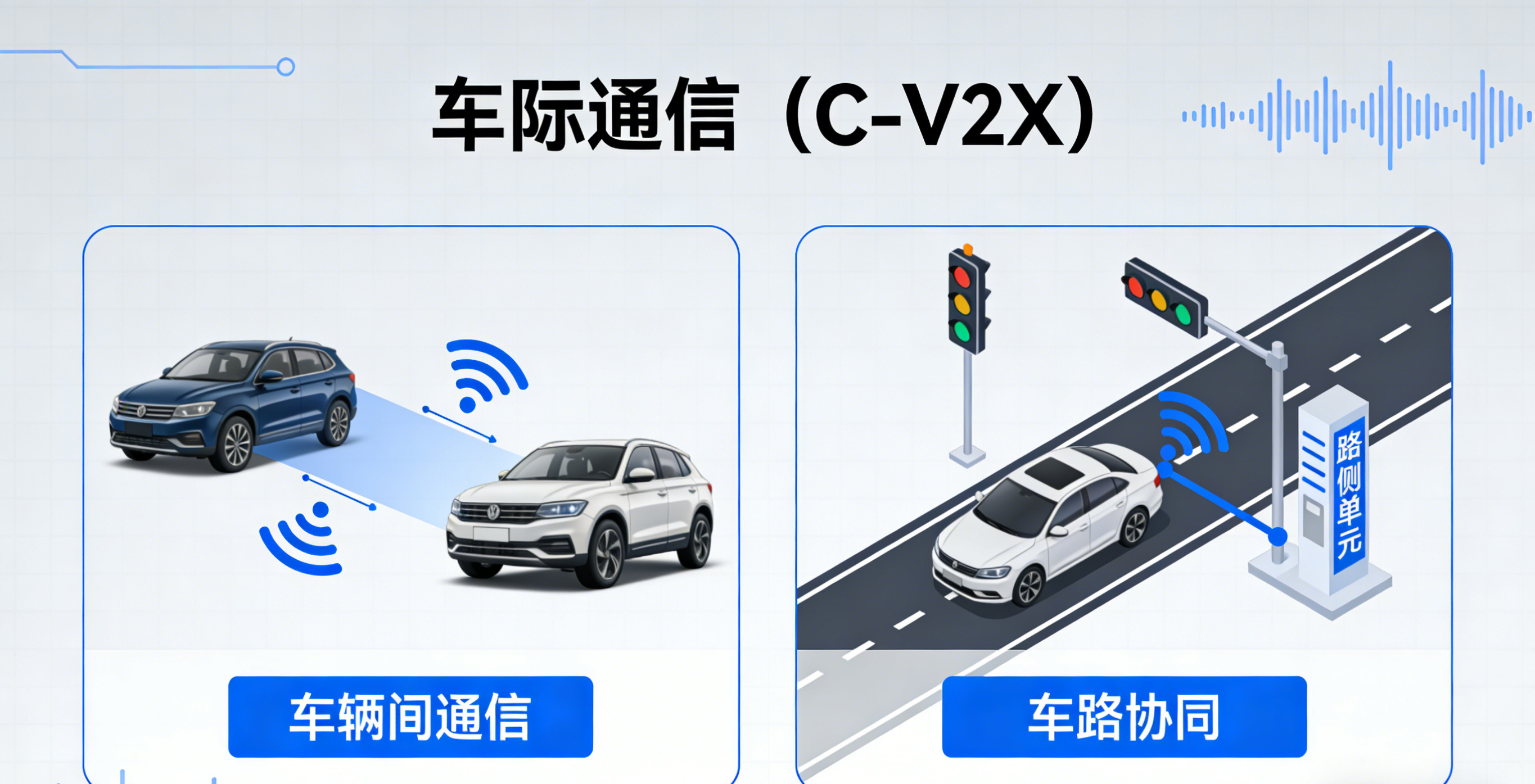
Its core value lies in granting vehicles "beyond-line-of-sight perception" capabilities that surpass their onboard sensors (cameras, radar). This allows a vehicle not only to "see" what's in its direct line of sight but also to "sense" traffic conditions around a corner or at a distant intersection.
C-V2X integrates two communication modes to cover four key scenarios, ranging from safety warnings to cooperative driving:
|
Communication Type |
Communication Target |
Core Function |
Typical Applications |
|
V2V (Vehicle-to-Vehicle) |
Direct communication between vehicles |
Real-time exchange of position, speed, braking status, etc., enabling collision avoidance warnings and cooperative driving. |
Forward Collision Warning, Emergency Brake Light Warning, Overtaking Assist, Platooning. |
|
V2I (Vehicle-to-Infrastructure) |
Vehicles with road infrastructure (traffic lights, road signs) |
Acquire traffic light status, speed limits, construction warnings, enabling signal information "in the car" and optimized traffic flow. |
Red Light Warning, Green Wave Speed Guidance, Roadside Danger Warning, Traffic Signal Timing Optimization. |
|
V2P (Vehicle-to-Pedestrian) |
Vehicles with pedestrians/cyclists |
Detect the location of vulnerable road users and provide advance warning of potential collision risks. |
Pedestrian/Cyclist Collision Warning, Child/Elderly Crossing Alert. |
|
V2N (Vehicle-to-Network) |
Vehicles with cloud-based service platforms |
Connect to the internet for real-time navigation, traffic updates, infotainment, and remote vehicle control. |
High-Definition Map Updates, Online Music/Video, Remote Diagnostics, Fleet Management. |
How C-V2X Works: Uu Interface and PC5 Interface
C-V2X utilizes two communication interfaces, each responsible for different coverage and latency requirements:
Uu Interface (Cellular Communication): Connects to the cloud via 4G/5G base stations. Used for V2N scenarios, providing wide-area services like navigation, infotainment, and remote information. It supports high bandwidth but may have some network latency.
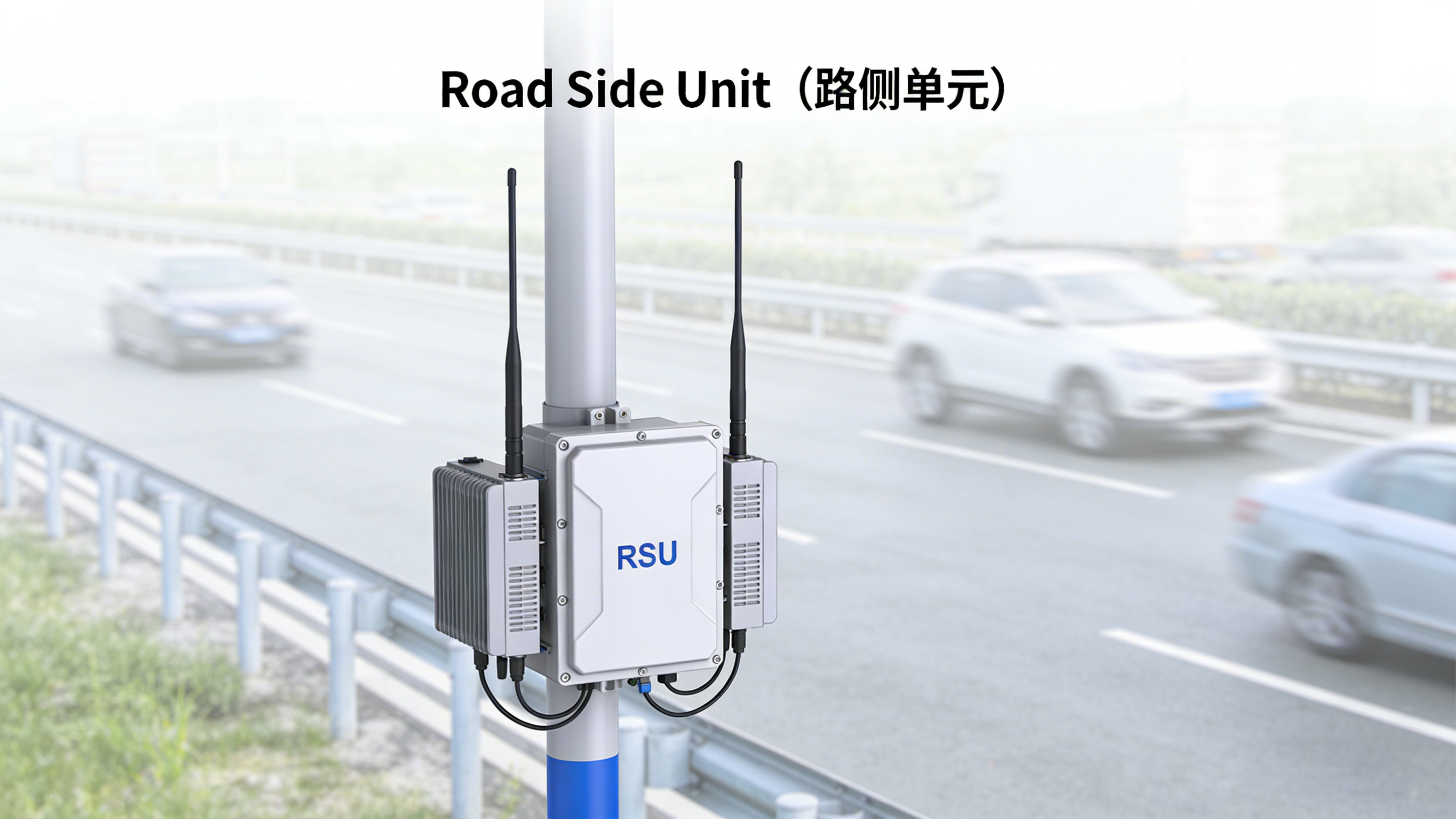
PC5 Interface (Direct Communication): Operates independently of base stations, enabling direct, low-latency (millisecond-level) communication between vehicles (V2V) or with roadside units (V2I). This is the key technology for safety-critical applications (e.g., collision avoidance) and functions effectively even in areas with poor network coverage.
China's Leading Position and Progress
China holds a leading position globally in the C-V2X field, primarily demonstrated by:
Strong Policy Drive: The government has explicitly designated C-V2X as a crucial part of its "New Infrastructure" initiative. 17 national-level testing and demonstration zones have been established nationwide, including in Wuxi, Beijing Yizhuang, and Shanghai Jiading.
Accelerated Large-Scale Deployment: By 2025, over 10,000 kilometers of roads have achieved C-V2X network coverage, with more than 15,000 roadside units (RSUs) deployed. Over 20 cities have launched regular application pilots for "Vehicle-Road-Cloud Integration" based on C-V2X.
Factory-Installed Mass Production: An increasing number of new vehicles are coming with pre-installed C-V2X capabilities. Brands like NIO, Li Auto, Xpeng, and Hongqi offer models equipped with V2X communication features.
Future Evolution: Moving Towards "Vehicle-Road-Cloud Integration"
C-V2X is currently transitioning from technical validation to large-scale application, with the ultimate goal of achieving "Vehicle-Road-Cloud Integration."
Single-Vehicle Intelligence + Cooperative Perception: Roadside perception information (e.g., from cameras and radar) is "shared" with vehicles via C-V2X, compensating for the blind spots of onboard sensors.
Cooperative Decision-Making and Control: In the future, vehicles could coordinate with traffic signals for "green wave passages." Multiple autonomous trucks could form platoons for automated following, saving fuel consumption.
In Summary: C-V2X serves as the bridge connecting physical vehicles to the digital transportation world. It not only makes individual vehicles "smarter" but, more importantly, connects vehicles, roads, and the cloud into a unified whole, making the entire transportation system "intelligent." It is the cornerstone for achieving a future mobility vision of zero accidents, zero congestion, and zero emissions.
Shenzhen Fholink Technology Co., Ltd., assessing the current trends and leveraging its accumulated experience in the optical communication industry, has proactively collaborated with several professional companies to conduct research and development on IoV technology and its supporting equipment, achieving excellent results. Both new and existing clients are welcome to contact us for consultation at any time!


