

Fiber Optic Circulator
In an optical communication link, the fiber optic circulator is a key device that may not have a high profile but is indispensable. It functions like a precise "traffic controller" in the optical path, directing optical signals to transmit in a specific sequential order, thereby efficiently utilizing fiber resources and ensuring stable system operation.
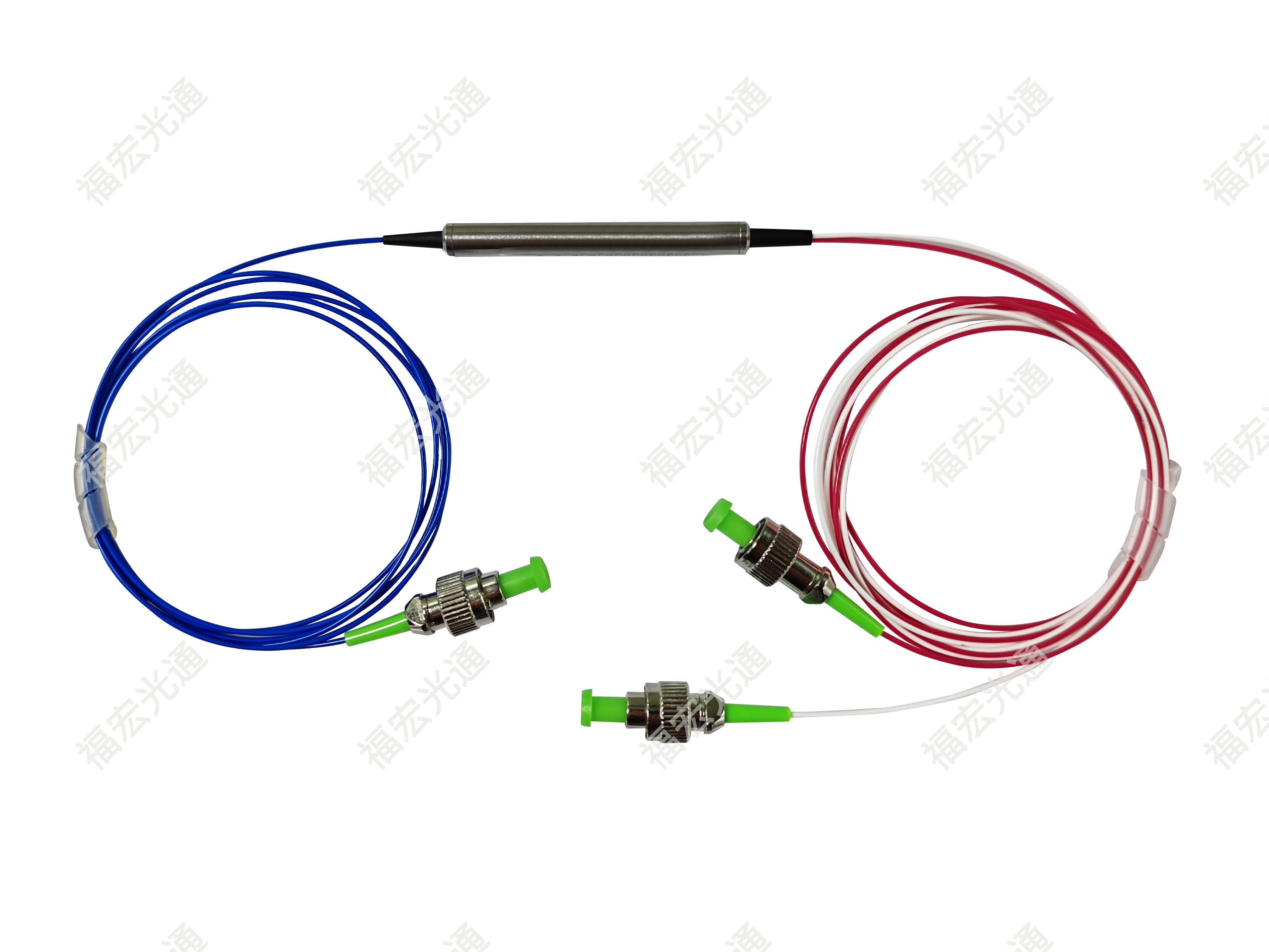
I. What is a Fiber Optic Circulator?
A fiber optic circulator is a multi-port non-reciprocal optical device. When an optical signal enters from one port, it can only exit from the next port in a fixed sequence—for example, in a three-port circulator, light input from Port 1 exits from Port 2, and light input from Port 2 exits from Port 3. This transmission direction is irreversible.
Compared with an optical isolator, which is a "two-port one-way valve," a circulator is a multi-port "unidirectional loop channel." The main characteristic of a fiber optic circulator is that it enables bidirectional optical signal transmission over a single optical fiber—which is particularly valuable in scenarios where fiber resources are scarce, such as metropolitan area networks and fronthaul networks.
II. Operating Principle: Non-Reciprocal Optical Path "Control"
The operating principle of a fiber optic circulator is similar to that of an isolator, both based on the non-reciprocity of the Faraday magneto-optic effect. Inside the circulator, the optical signal sequentially passes through components such as polarizing beam splitters and Faraday rotators, where its polarization plane is rotated by a specific angle, allowing the signal to propagate only in the predetermined port order while blocking the reverse path.
Its key technical specifications include insertion loss, isolation, crosstalk, polarization-dependent loss, polarization mode dispersion, and return loss. Among these, insertion loss and isolation are the core parameters for evaluating circulator performance—lower insertion loss means higher signal transmission efficiency; higher isolation means less crosstalk between ports. Fholink's fiber optic circulators achieve typical insertion loss below 0.6 dB and isolation better than 40 dB at typical operating wavelengths (1310 nm/1550 nm), meeting the performance requirements of most optical communication systems.
III. Main Types and Selection Guidelines
Fiber optic circulators are mainly classified into three-port and four-port types based on port count, and into single-mode, multi-mode, and polarization-maintaining types based on fiber type. Different application scenarios have different requirements for circulators:
- Three-port circulators: The most commonly used type, suitable for optical amplifiers, dispersion compensation, OTDR, and other applications.
- Four-port circulators: Suitable for more complex optical path configurations, such as bidirectional pumping systems and advanced optical add-drop multiplexers.
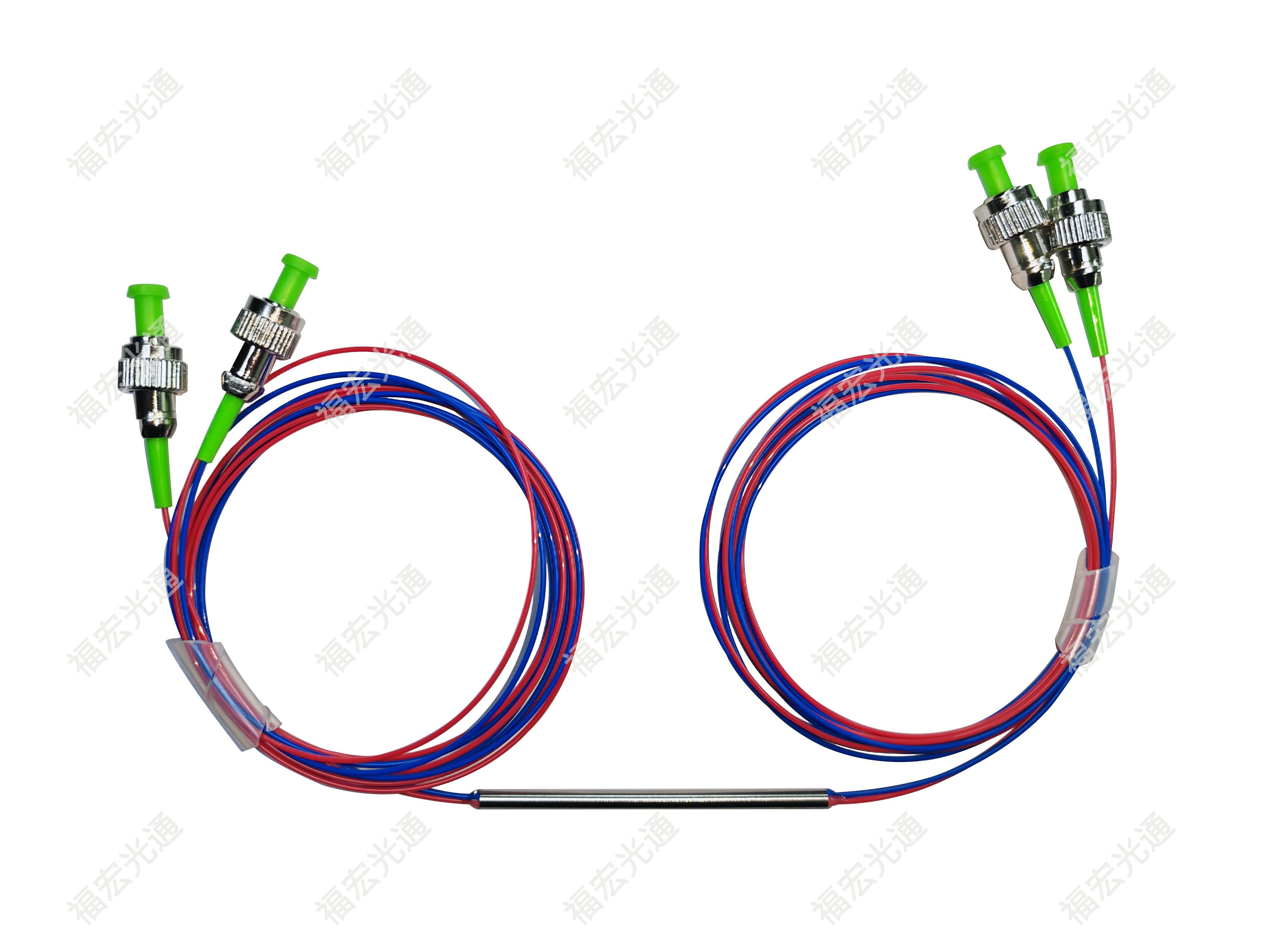
- Polarization-maintaining circulators: Specifically designed for coherent communication and fiber optic sensing systems that have stringent polarization requirements.
Selection requires comprehensive consideration of factors such as operating wavelength, insertion loss, isolation, power handling capability, and port configuration. Fholink offers customized circulator selection and solution design services based on customers' specific application requirements.
IV. Core Application Scenarios
Fiber optic circulators are widely used across various aspects of optical communication and sensing:
- Optical Amplifier Systems: Used in EDFAs for pump light coupling and isolation, ensuring effective interaction between pump light and signal light to improve amplifier gain and noise performance; used in Raman fiber amplifiers to form feedback loops and enhance nonlinear effects.
- Dispersion Compensation Modules (DCM): Used to form dispersion compensation cavities, achieving phase compensation for optical signals at different wavelengths by adjusting the parameters of the ring cavity, thereby reducing signal distortion.
- Single-Fiber Bidirectional Transmission: By applying circulators in optical transceiver modules, bidirectional transmission using the same wavelength over a single fiber can be achieved, saving 50% of fiber resources.
- 5G Fronthaul and Backhaul Networks: Circulators are key components in 5G base stations, used to isolate output and input signals at the base station antenna. With the large-scale deployment of 5G-A networks, the demand for circulators continues to grow.
- Fiber Optic Sensing and Testing: Widely used in fiber optic sensing, OTDR testing, and other applications.
- Optical Add-Drop Multiplexers (OADM) and WDM Systems: Combined with fiber gratings to form WDM systems.
V. Market Trends: Growth Opportunities Driven by AI Computing Power
As the world's largest production base and consumer market for optical communication devices, China contributed 42.3% of global optical circulator shipments in 2025, corresponding to a market size of approximately RMB 3.86 billion. Data centers and cloud computing have become the largest single application scenario, consuming 54.7% of total optical circulator shipments in 2025. New demand from edge computing and AI computing clusters is expected to inject more than 20% additional order growth into the optical circulator market.
In terms of technology evolution, miniaturization, low insertion loss, and high isolation have become the three main trends: typical insertion loss of commercial products in 2025 has dropped below 0.4 dB, with isolation exceeding 50 dB. Integrated designs (multi-channel circulators based on silicon photonics platforms) are transitioning from laboratory verification to small-batch trial production.
VI. Fholink Technology's Value: From Components to Solutions
For Fholink Technology, its value lies not only in providing high-performance optical circulators as individual components, but also in its positioning as a "total optical communication and transmission solutions provider."
In Data Center Interconnect (DCI) solutions, circulators work together with EDFAs, DCMs, OLPs, and other equipment to support high-speed, long-distance optical transmission. In 5G fronthaul solutions, circulators are combined with WDM multiplexers to achieve single-fiber bidirectional transmission, effectively saving fiber resources. In fiber optic sensing and testing solutions, they provide reliable optical path guidance for OTDR, distributed sensing, and other applications.
Leveraging its own brand and comprehensive product portfolio, Fholink offers cost-effective fiber circulator solutions—ensuring component performance while effectively controlling overall solution costs. Whether for standard products or customized development, Fholink is committed to being a trusted optical component partner for customers through solid products and professional services.


