

Optical Switch
In optical communication networks, optical signals need to be flexibly scheduled, switched, and protected just like electrical signals. The Optical Switch is the core component that undertakes this mission — it controls the transmission path of optical signals, enabling on/off switching, routing, and cross-connection.
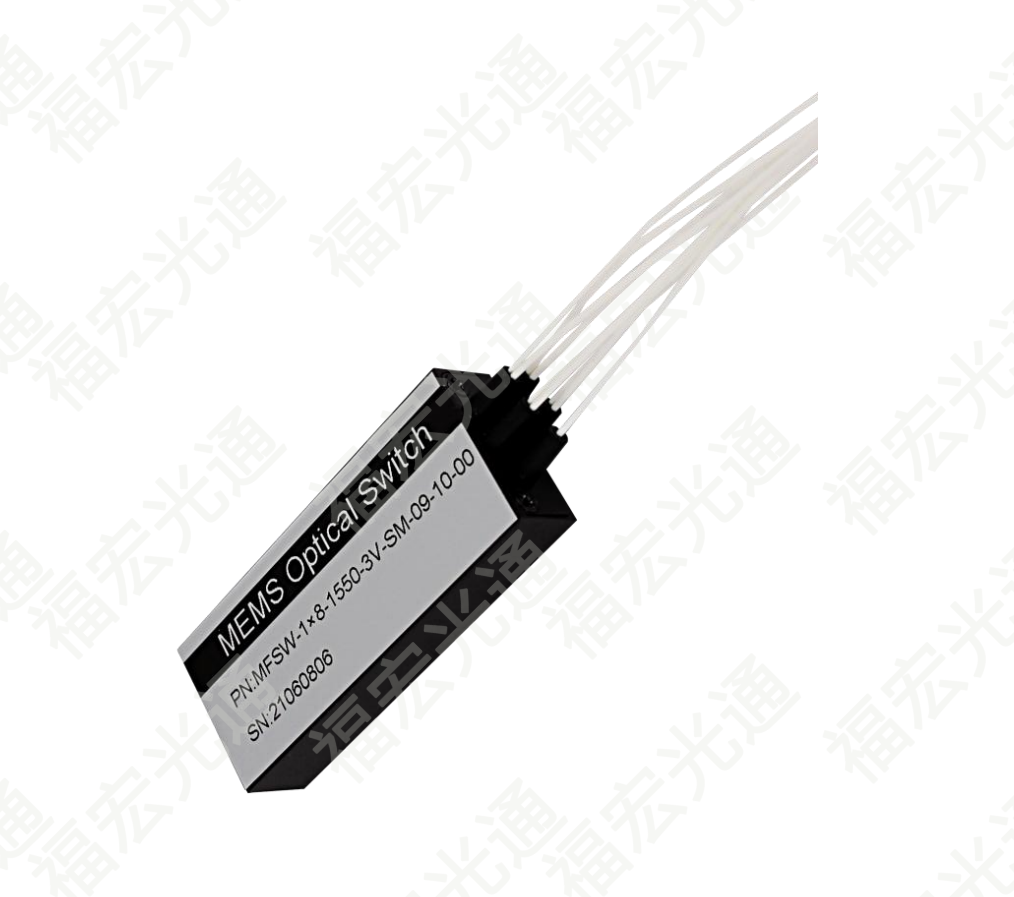
I. What is an Optical Switch?
An optical switch is a passive optical device with one or more selectable transmission windows, used to perform path switching or logical operations on optical signals in optical transmission lines or integrated optical circuits. In simple terms, it is the "railroad switch" of the optical network — determining which input port the optical signal enters from and which output port it exits from.
Optical switches have two core application scenarios in optical networks:
- Protection Switching: When the main optical path experiences a fiber break or failure, the optical switch automatically switches the optical signal to the backup path within milliseconds, ensuring service continuity. This is the core function of OLP (Optical Line Protection) equipment.
- Optical Switching: In OXC (Optical Cross-Connect) and ROADM nodes, optical switches enable flexible scheduling of optical signals from any input port to any output port — a core technology of all-optical networks.
II. Operating Principles: Five Major Technology Routes
There are various implementation technologies for optical switches. Fholink Technology provides diversified technical solutions for customers based on different application scenarios:
This is the most classic and mature technology route, further divided into relay type and motor type. It uses an electromagnet to drive a prism or mirror, changing the propagation path of light through mechanical movement. Advantages include extremely low insertion loss (<1 dB), extremely high isolation (>50 dB), independence from wavelength and polarization, low cost, and mature technology. Disadvantages are relatively slow switching speed (millisecond level), limited lifetime (approximately 1 million cycles), and larger size. Suitable for protection switching and optical path testing scenarios where speed is not the primary concern.
MEMS (Micro-Electro-Mechanical Systems) optical switches fabricate tiny electrostatic-driven mirror arrays on silicon wafers. By controlling the angle of the mirrors, light is directed to different output ports. Advantages include fast switching speed (microsecond level), high integration, capability to create large-scale arrays (1×N to N×N), small size, and low power consumption. Disadvantages include relatively higher insertion loss (2–6 dB) and lower isolation (30–40 dB). Mainly used in OXC nodes and large-scale optical switching.
3. Liquid Crystal (LC) Optical Switch
Utilizes the electro-optic effect of liquid crystals to control the polarization state of light, then uses a polarizing beam splitter to achieve optical path switching. Advantages include fast switching speed (microsecond to millisecond level), low power consumption, and multi-stage cascading capability. Disadvantages include polarization-dependent loss, limited isolation, and temperature sensitivity. Mainly used in WSS (Wavelength Selective Switch) and OADM.
4. Thermo-Optic Switch
Uses the thermo-optic effect (temperature changes the refractive index) to achieve optical path switching, typically fabricated on a PLC platform. Advantages include compatibility with PLC processes, large-scale integration capability, and low cost. Disadvantages include slow switching speed (millisecond level) and relatively high power consumption. Suitable for integrated optical switch arrays.
5. SOA Optical Switch
Based on Semiconductor Optical Amplifiers (SOA): when electrical power is applied, the optical signal is amplified (ON state); when power is removed, the optical signal is absorbed (OFF state). Advantages include extremely fast switching speed (nanosecond level) and built-in amplification capability to compensate for loss. Disadvantages include polarization-dependent gain and higher noise. Mainly used in data center optical switching and high-speed optical packet switching.
III. Key Performance Parameters
The performance of optical switches is mainly evaluated based on the following core indicators:
|
Parameter |
Meaning |
Mechanical |
MEMS |
Liquid Crystal |
SOA |
|
Insertion Loss (IL) |
Power loss after passing through the switch;lower is better |
<1 dB |
2–6 dB |
2–4 dB |
Has gain but with noise |
|
Isolation |
Optical power leaking to unintended ports in the "OFF" state |
>50 dB |
30–40 dB |
35–45 dB |
Moderate |
|
Switching Speed |
Time required to complete one switching operation |
Millisecond |
Microsecond |
Microsecond–Millisecond |
Nanosecond |
|
Port Count |
Maximum number of input/output ports supported |
1×2 ~ 1×8 |
1×N ~ N×N |
1×2 ~ 1×N |
Moderate |
Among these, insertion loss directly affects the link budget, isolation determines the degree of signal crosstalk between ports, and switching speed determines the system's failover response time during faults.
IV. Core Application Scenarios
The applications of optical switches cover nearly every key node in optical communication networks:
- Optical Line Protection (OLP): When a fiber break occurs, the optical switch completes the main-to-backup route switching within milliseconds, ensuring service continuity. This is the most classic and widespread application of optical switches.
- Optical Cross-Connect (OXC): At core nodes of backbone and metropolitan area networks, MEMS optical switch arrays enable optical signal scheduling between any ports.
- ROADM and WSS: In Reconfigurable Optical Add-Drop Multiplexers, liquid crystal optical switches work together with Wavelength Selective Switches to enable add/drop of any wavelength at any node.
- Real-Time Network Performance Monitoring: By polling and switching optical switches between different optical channels, centralized monitoring of multiple fiber links is achieved.
- Optical Component Testing: In R&D and production, optical switches are used for automated testing of multi-channel optical components.
- Data Center Optical Switching: SOA optical switches, with their nanosecond-level switching speed, are becoming an important choice for intra-data-center optical interconnection.
V. Market Trends: Explosive Growth Driven by AI Computing Power
The optical switch market is experiencing unprecedented growth opportunities:
- Market Size Continues to Expand: The global optical switch market reached $8.23 billion in 2025 and is projected to grow to $20.85 billion by 2034, with a compound annual growth rate of 10.88%. Other institutions predict the global optical switch market will be approximately $7.6–8.2 billion in 2025 and could reach $24.5 billion by 2035.
- AI Data Centers Becoming the Core Driver: The large-scale deployment of data centers and AI computing centers is the primary force driving the surge in optical switch demand.
- MEMS Optical Switches Growing Rapidly: The global MEMS optical switch market is approximately $163 million in 2025, benefiting from OXC and large-scale optical switching deployment, with a growth rate leading other technology routes.
- Technology Direction: Higher Speed and Integration: From millisecond-level mechanical switches to microsecond-level MEMS and nanosecond-level SOA, switching speeds continue to increase; from discrete components to silicon photonic integration, miniaturization and high density are clear trends.
VI. Fholink Technology's Value: From Components to Solutions
For Fholink Technology, its value lies not only in providing high-performance optical switches as individual components but also in its positioning as a "total optical communication and transmission solutions provider."
In OLP optical line protection solutions, optical switches work together with optical power monitoring modules to achieve millisecond-level automatic main-to-backup path switching, increasing network availability to over 99.99%. In OTN optical transport network solutions, optical switches collaborate with WSS, EDFA, and other equipment to build a flexibly schedulable optical layer network. In Data Center Interconnect (DCI) solutions, MEMS optical switch arrays support large-scale optical switching requirements.
Whether it is standard 1×2, 1×N mechanical optical switches or customized large-scale MEMS optical switch arrays, Fholink Technology is committed to being a trusted optical component partner for customers through solid products and professional services.


